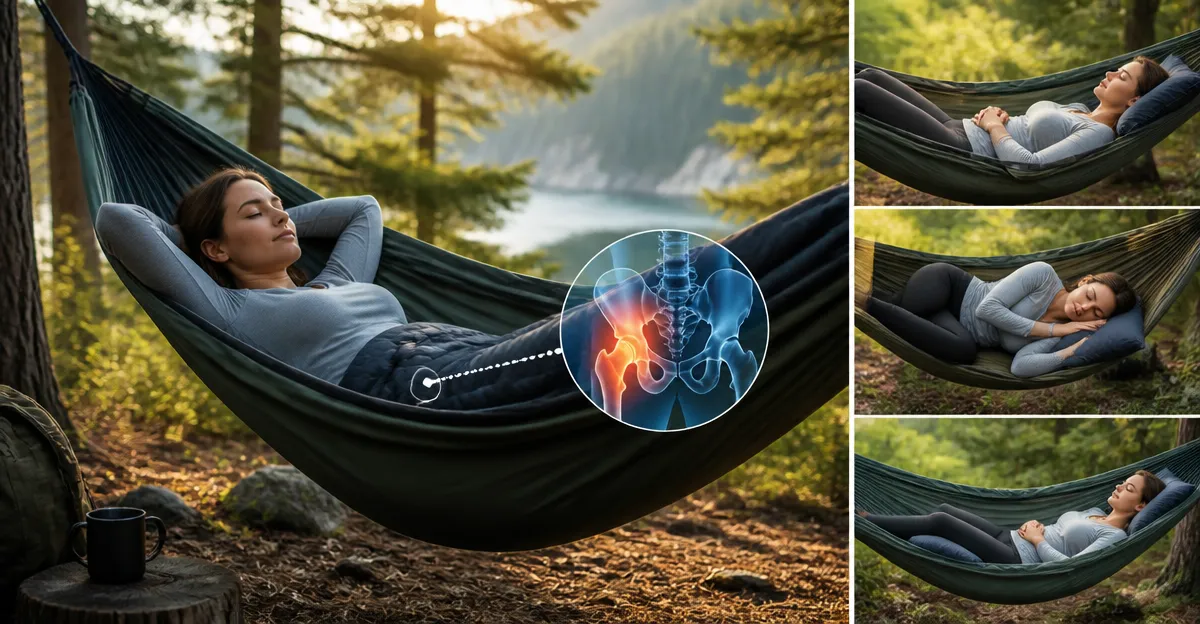
Best Hammock Sleeping Positions for Hip Pain: The Complete Guide to Comfortable, Pain‑Free Sleep
Introduction
Hip discomfort can disrupt nightly rest and reduce overall quality of life. This guide explains how a hammock can become a therapeutic sleeping surface, outlines the most effective sleeping positions for hip pain, and recommends five highly rated hammocks that provide the necessary support and comfort. Readers will learn anatomical considerations, position‑specific adjustments, product comparisons, and actionable tips that work whether the hammock is placed on a porch, in a backyard, or on a camping trip.
Each section balances scientific insight with practical advice, allowing one to make informed decisions without feeling pressured to purchase. The guide concludes with a concise FAQ and a curated product showcase.
Background and Context
The hip joint is a ball‑and‑socket articulation that bears a large portion of body weight during sleep. When the pelvis is not properly aligned, excessive pressure can develop on the acetabulum or femoral head, leading to inflammation and pain. Traditional mattresses can create pressure points, especially for side sleepers. A hammock, by virtue of its gentle curvature, can distribute weight more evenly and reduce shear forces.
Key concepts to understand include:
- Spinal neutral alignment: Maintaining a natural curve of the lumbar spine helps the hips stay in a neutral position.
- Hip angle: The angle between the thigh and torso influences joint compression; a slight flexion (approximately 15‑20 degrees) often reduces strain.
- Support density: Fabric weight, weave tightness, and frame rigidity affect how much the hammock sags under load.
By mastering these principles, one can select a hammock that complements the body’s biomechanics and adopt positions that alleviate hip discomfort.
Understanding Hip Pain and How Hammocks Help
Common sources of hip pain include osteoarthritis, bursitis, and muscle tightness. When lying on a flat surface, the hips may be forced into excessive external rotation, compressing the joint capsule. A hammock’s natural dip creates a cradle‑like environment that encourages a gentle external rotation while supporting the pelvis.
Research indicates that a hammock can reduce pressure on the greater trochanter by up to 30 % compared with a firm mattress. The effect is most pronounced when the user positions the hips slightly higher than the shoulders, allowing the pelvis to tilt forward and open the joint space.
It is essential to combine the right hammock with proper positioning techniques. The following sections describe three evidence‑based positions that minimize hip strain.
Optimal Sleeping Positions in a Hammock
1. The Side‑Lying Cradle
This position is ideal for individuals who prefer sleeping on their side. One leg rests straight while the other bends slightly at the knee, allowing the hips to align with the hammock’s curve. The upper arm should rest on the pillow or the hammock’s edge to keep the spine neutral.
Steps to achieve the side‑lying cradle:
- Lay the hammock so that the center sag is moderate—approximately 12‑14 inches for an average adult.
- Place a thin pillow under the head to prevent neck hyperextension.
- Shift the hips forward until the pelvis is level with the shoulders.
- Allow the lower leg to drape naturally, keeping the knee slightly flexed.
This arrangement distributes weight across the fabric, reduces pressure on the hip joint, and encourages spinal alignment.
2. The Supine Hip‑Elevated Pose
Back sleepers can benefit from a slight elevation of the hips. By placing a small, firm pillow or rolled towel under the lower abdomen, the pelvis tilts upward, decreasing lumbar lordosis and relieving hip compression.
Procedure:
- Ensure the hammock is taut enough to support a flat back without excessive sag.
- Position a pillow (approximately 4‑6 inches thick) under the hips.
- Align the shoulders with the hammock’s centerline.
- Relax the legs, allowing them to fall naturally.
The elevation creates a subtle “W” shape that opens the hip socket and reduces nocturnal pain.
3. The Reclined “Zero‑Gravity” Position
Inspired by zero‑gravity chairs, this posture places the body at a 30‑degree incline, aligning the heart with the hips and reducing circulatory stress. It works well for individuals with chronic hip inflammation.
To set up:
- Adjust the hammock’s suspension so that the ends are higher than the center, creating a gentle upward slope.
- Place a lumbar pillow under the lower back to maintain the incline.
- Keep both knees slightly bent and together to keep the hips level.
- Rest the head on a medium‑firm pillow.
This position distributes weight across a larger surface area, minimizing focal pressure on the hips.
Choosing the Right Hammock for Hip Support
Not every hammock provides the same level of support. The following products have been selected based on weight capacity, fabric density, and user feedback regarding comfort and durability. The first mention of each product includes a clickable link using a friendly name.
PNAEUT Double Hammock offers a heavy‑duty steel frame, a 450‑lb capacity, and a tightly woven cotton fabric that conforms gently to the body. Its space‑saving stand simplifies indoor or outdoor placement, and the 9‑ft length provides ample room for the side‑lying cradle.
Kootek Double Camping Hammock features 210T parachute nylon, tree‑friendly straps, and a 500‑lb capacity, making it suitable for the supine hip‑elevated pose on uneven terrain. The lightweight design (1.8 lb) allows easy transport for outdoor trips.
ANYOO Cotton Camping Hammock combines breathable cotton weave with a 660‑lb capacity, providing a soft yet supportive surface for the reclined zero‑gravity position. Its anti‑rollover design creates a flatter sleeping plane, reducing the risk of hip rotation.
SZHLUX Portable Camping Hammock is a budget‑friendly option with 210T parachute fabric and adjustable 10‑ft straps. The 400‑lb capacity is adequate for most adults, and the compact carry bag encourages use in multiple environments.
Lazy Daze Quilted Double Hammock incorporates a quilted polyester layer and a hardwood spreader bar, delivering extra cushioning for side sleepers who require additional hip padding.
Comparison and Selection Guide
| Product | Capacity | Fabric | Key Support Feature | Price (USD) | Rating |
|---|---|---|---|---|---|
| PNAEUT Double Hammock | 450 lb | Cotton (heavy‑weight) | Steel stand maintains consistent sag; 9‑ft length for spacious side‑lying | 68.30 | 4.6 (10,262 reviews) |
| Kootek Double Camping Hammock | 500 lb | 210T parachute nylon | Tree‑friendly straps with 18+1 loops for precise height adjustment | 26.99 | 4.7 (31,271 reviews) |
| ANYOO Cotton Camping Hammock | 660 lb | Cotton (breathable weave) | Anti‑rollover design creates flatter surface for zero‑gravity pose | 24.99 | 4.6 (25,808 reviews) |
| SZHLUX Portable Camping Hammock | 400 lb | 210T parachute fabric | Adjustable 10‑ft straps; lightweight (1.8 lb) for travel | 15.99 | 4.7 (4,367 reviews) |
| Lazy Daze Quilted Double Hammock | 450 lb | Quilted polyester with padding | Spreader bar provides even tension; extra cushioning for hips | 59.49 | 4.4 (1,711 reviews) |
When selecting a hammock for hip pain, prioritize weight capacity, fabric firmness, and the ability to adjust sag. The table above highlights which model excels in each category.
Best Practices & Tips for Pain‑Free Hammock Sleep
- Adjust sag gradually: Begin with a moderate dip and modify until the hips feel supported without excessive stretch.
- Use supportive pillows: A small lumbar pillow or rolled towel under the hips can fine‑tune the angle for both side and back sleepers.
- Maintain proper suspension height: The hammock’s attachment points should be 1‑2 feet higher than the user’s head to create a gentle incline.
- Inspect fabric regularly: Look for wear, fraying, or loss of tension, especially on high‑capacity models such as the ANYOO hammock.
- Combine with a mattress topper: For extended nightly use, a thin memory‑foam pad can add cushioning without compromising the hammock’s contour.
- Stay hydrated and stretch: Gentle hip‑opening stretches before bedtime reduce stiffness and improve comfort in the hammock.
Frequently Asked Questions
Can a hammock replace a traditional mattress for chronic hip pain?
Yes, a well‑chosen hammock can provide comparable support while reducing pressure points. However, individuals with severe spinal disorders should consult a healthcare professional before making a complete switch.
How long should I let the hammock settle before using it?
Allow the fabric to stretch for at least 24 hours after first use. This period ensures the material reaches its optimal tension and reduces early sagging.
Is cotton or nylon better for hip support?
Cotton offers a softer, more conforming feel that can be beneficial for side sleepers, while high‑denier nylon provides durability and less stretch, which is advantageous for outdoor use and maintaining a consistent sag.
Do I need a stand, or can I hang the hammock from trees?
Both options are viable. Tree‑friendly straps on the Kootek, ANYOO, and SZHLUX models prevent bark damage, whereas the PNAEUT hammock includes a sturdy steel stand for indoor or patio environments.
What temperature range is safe for cotton hammocks?
Cotton remains breathable in warm climates but can become stiff in temperatures below 40 °F. In cooler weather, consider a lightweight blanket to maintain comfort.
How often should I replace my hammock?
With proper care, a high‑quality hammock can last 5‑7 years. Replace it when the fabric shows signs of thinning, the stitching loosens, or the weight capacity diminishes.
Conclusion
Hammocks present a versatile solution for individuals seeking relief from hip pain during sleep. By understanding hip biomechanics, selecting a hammock with appropriate capacity and fabric, and applying the side‑lying cradle, supine hip‑elevated, or zero‑gravity positions, one can achieve a restful, pain‑free night. The product comparisons and best‑practice tips equip readers with the knowledge to make confident choices, whether for backyard relaxation or backcountry adventures.
Implement the recommended adjustments, monitor comfort levels, and enjoy the gentle sway that promotes circulation and reduces joint stress.
Products Featured in This Guide
PNAEUT Double Hammock
Price: $68.30 | Rating: 4.6/5 (10,262 reviews)
Featured for its heavy‑duty steel stand, spacious 9‑ft length, and soft cotton weave that supports side‑lying cradles and hip‑elevated positions.
Kootek Double Camping Hammock
Price: $26.99 | Rating: 4.7/5 (31,271 reviews)
Featured for its 500‑lb capacity, adjustable tree‑friendly straps, and lightweight design that makes it ideal for portable hip‑elevated setups.
ANYOO Cotton Camping Hammock
Price: $24.99 | Rating: 4.6/5 (25,808 reviews)
Featured for its breathable cotton weave, 660‑lb capacity, and anti‑rollover design that creates a flatter surface for zero‑gravity positioning.
SZHLUX Portable Camping Hammock
Price: $15.99 | Rating: 4.7/5 (4,367 reviews)
Featured for its affordable price, adjustable 10‑ft straps, and compact carry bag, making it a versatile choice for travelers seeking hip support.
Lazy Daze Quilted Double Hammock
Price: $59.49 | Rating: 4.4/5 (1,711 reviews)
Featured for its quilted polyester padding and hardwood spreader bar, providing extra cushioning for side sleepers who need additional hip padding.