Introduction
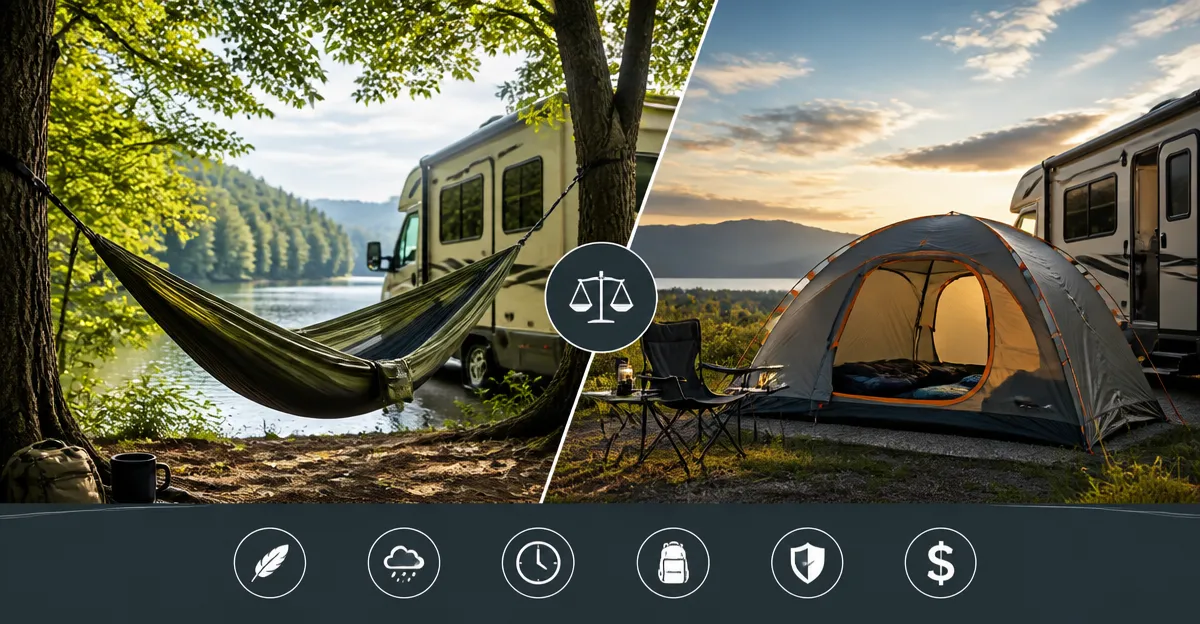
When an individual embarks on an RV adventure, the decision between a hammock and a tent can shape the overall experience. This guide explores the advantages and disadvantages of each shelter type, provides a systematic comparison, and offers actionable advice for selecting the most suitable option. Readers will gain insight into comfort, weather protection, setup complexity, and weight considerations, all of which influence the quality of an RV camping trip. By the end of this article, one will be equipped to make an informed choice that aligns with personal preferences and travel style.
Background and Context
RV travelers often seek lightweight, versatile, and easy‑to‑store sleeping solutions that complement the vehicle’s limited storage space. Traditional tents have served campers for decades, offering enclosed protection from the elements, while hammocks have surged in popularity due to their minimal footprint and rapid deployment. Understanding the material science behind parachute‑grade nylon, the physics of load distribution, and the impact of climate on shelter performance provides a solid foundation for evaluating each option. Moreover, regulations in many national parks now encourage tree‑friendly designs, making hammock straps a relevant consideration for environmentally conscious campers.
Understanding Hammocks for RV Camping
Hammocks create a suspended sleeping platform that distributes body weight across two anchor points, reducing pressure on the ground and often improving airflow. Modern camping hammocks are constructed from 210T parachute nylon, a fabric that combines durability, quick‑dry properties, and resistance to tearing. The inclusion of tree‑friendly straps with multiple adjustment loops eliminates the need for knots, simplifying setup and protecting tree bark. For RV users, a hammock can be stored in a compact stuff sack, freeing valuable interior space for other gear.
The Kootek Camping Hammock exemplifies these attributes, featuring a 500 lb capacity, 120" × 78" dimensions, and a bundled size of 8.3 × 4.7 × 4.7 inches. With a price of $21.99 and a 4.7‑star rating from over 31,000 reviews, it offers a cost‑effective solution for two‑person use. The hammock’s triple‑interlocking stitching and 210T nylon construction ensure longevity, while the attached carry bag streamlines transportation.
Another popular choice is the Wise Owl Camping Hammock, which weighs only 24 oz and folds to the size of an eggplant. Its single version supports 400 lb and measures 9 ft × 4.5 ft, whereas the double version accommodates 500 lb with a 10 ft × 6.5 ft footprint. Priced at $25.90 and boasting a 4.8‑star rating from 3,047 reviewers, it highlights portability and ease of use, making it ideal for backpackers who travel light.
The SZHLUX Camping Hammock offers a balanced blend of durability and affordability. With a 400 lb capacity, 106.3" × 55.1" dimensions, and a weight of 1.8 lb, it provides ample space for two adults. At $15.99 and a 4.7‑star rating from 4,341 reviews, it demonstrates that high‑quality materials can be obtained at a modest price point.
Understanding Tents for RV Camping
Traditional tents deliver an enclosed environment that shields occupants from wind, rain, insects, and temperature fluctuations. Modern lightweight tents employ ripstop nylon or polyester, often with a waterproof coating measured in millimeters of hydrostatic head. For RV users, a tent can serve as an auxiliary shelter when the vehicle’s awning is insufficient or when privacy is desired in a crowded campground.
The Rivenlo Hammock Tent merges hammock comfort with tent protection, featuring a built‑in mosquito net and rainfly. Constructed from 70D nylon, it supports up to 440 lb and weighs 2.5 lb, making it a versatile hybrid for RV adventurers who value both ventilation and weather defense. Priced at $89.99 with a 4.4‑star rating from 84 reviews, it illustrates how a single product can address multiple shelter needs.
While the Rivenlo model represents a hybrid approach, conventional freestanding tents remain a staple for many RV enthusiasts. These tents typically require separate guylines, stakes, and poles, increasing setup time but offering robust protection against severe weather. When comparing these options, one must weigh the trade‑off between convenience and comprehensive shelter.
Hybrid Options and When to Use Them
Hybrid solutions such as hammock‑tents provide a middle ground, delivering the airy feel of a hammock while protecting against insects and light rain. They are especially useful in temperate climates where full‑scale tent protection is unnecessary but some barrier against bugs is desired. The Rivenlo Hammock Tent exemplifies this concept, allowing users to sleep suspended while benefiting from a mosquito net and optional rainfly.
Choosing a hybrid product depends on factors such as typical weather conditions, campsite amenities, and personal comfort preferences. For instance, a traveler who frequently camps in regions with evening insects but low precipitation may prioritize a mosquito net over a full rainfly. Conversely, a family traveling with children may favor a traditional tent for its enclosed space and privacy.
Product Recommendations
Below are curated selections that complement the discussion of hammocks and tents for RV camping. Each recommendation aligns with specific use cases, budget constraints, and performance expectations.
- Kootek Camping Hammock – Ideal for couples seeking a spacious double hammock with robust load capacity. Its tree‑friendly straps and compact carry bag make it perfect for RV storage.
- Wise Owl Camping Hammock – Suited for solo travelers who prioritize ultra‑lightweight design and rapid deployment. The included straps and carabiners simplify setup without additional accessories.
- SZHLUX Camping Hammock – Offers excellent value for families or small groups needing a double hammock at an affordable price point.
- Rivenlo Hammock Tent – Best for adventurers who desire the comfort of a hammock combined with insect protection and optional rain protection.
Comparison and Selection Guide
| Criterion | Hammock | Tent | Hybrid (Hammock Tent) |
|---|---|---|---|
| Weight | 1.5‑2.5 lb (depends on model) | 4‑7 lb (average freestanding) | 2.5 lb (Rivenlo example) |
| Pack Size | 8‑10 inches compact | 30‑40 inches length | 40 × 12 cm compact |
| Weather Protection | Limited (requires tarp) | Full rainfly and groundsheet | Integrated mosquito net and optional rainfly |
| Setup Time | 2‑5 minutes with straps | 5‑15 minutes with poles | 3‑7 minutes with included hardware |
| Comfort | Suspended, promotes airflow | Grounded, stable for sleeping bags | Suspended with added protection |
| Cost | $16‑$26 average | $60‑$150 average | $90 average |
When evaluating these criteria, an RV camper should prioritize weight and pack size if interior storage is limited, while also considering the typical weather encountered on planned routes. For example, a solo backpacker traveling to desert locales may favour the Wise Owl Camping Hammock for its minimal weight, whereas a family camping in temperate forests may find the Rivenlo Hammock Tent more suitable.
Best Practices & Tips
- Inspect anchor points before hanging a hammock; choose sturdy trees with a diameter of at least 4‑inches to prevent breakage.
- Use tree‑friendly straps with multiple loops to distribute load and avoid damaging bark.
- Always empty pockets of sharp objects before lying in a hammock to prevent fabric punctures.
- For rain protection, attach a lightweight tarp using the hammock’s existing loops, creating a “rainfly” configuration.
- When using a tent or hybrid shelter, stake the perimeter securely to prevent wind uplift.
- Maintain cleanliness by machine‑washing nylon hammocks on a gentle cycle after removing carabiners; air‑dry to preserve fabric strength.
- Store hammocks and tents in breathable sacks to avoid mildew during extended off‑season periods.
Frequently Asked Questions
Can I use a hammock while parked at an RV campground?
Yes, most campgrounds allow hammock installation between trees or posts, provided that the user follows local regulations and respects other campers' space.
Do hammocks require a rainfly?
While a hammock alone offers limited protection from precipitation, a separate tarp or a hybrid model with an integrated rainfly can keep the sleeper dry during light rain.
How much weight can a typical camping hammock support?
Most modern hammocks, such as the Kootek Camping Hammock and Wise Owl Camping Hammock, are rated for 400‑500 lb, accommodating two adults comfortably.
Is a hammock suitable for cold‑weather camping?
With appropriate insulation, such as an under‑quilt and a sleeping pad, a hammock can be used in colder climates, though it may require more gear than a tent.
What is the advantage of a hybrid hammock‑tent over a traditional tent?
The hybrid design offers superior airflow, reduced setup time, and insect protection while still providing a barrier against light rain, making it a versatile compromise.
Can I attach a mosquito net to a regular hammock?
Yes, many hammocks include loops for attaching a separate net, or users can purchase aftermarket nets that clip onto existing straps.
How do I choose the right size hammock for my RV?
Measure the interior storage space, consider the number of occupants, and select a hammock whose folded dimensions fit comfortably within the RV’s compartments.
Conclusion
Both hammocks and tents present viable options for RV camping, each with distinct strengths related to weight, weather protection, and comfort. By assessing personal priorities—such as space constraints, climate, and group size—travelers can select the shelter that enhances their outdoor experience. The products highlighted in this guide illustrate a range of solutions that cater to diverse needs, from ultra‑light solo setups to family‑friendly hybrid shelters. Armed with this knowledge, one can embark on RV adventures confident in the choice of sleeping arrangement.
Products Featured in This Guide
Kootek Camping Hammock
Price: $21.99 | Rating: 4.7/5 (31,228 reviews)
Featured for its spacious double size, 500 lb capacity, and compact carry bag, making it ideal for RV storage and two‑person use.
Wise Owl Camping Hammock
Price: $25.90 | Rating: 4.8/5 (3,047 reviews)
Featured for its ultra‑lightweight design, quick setup, and versatility as both single and double configurations.
SZHLUX Camping Hammock
Price: $15.99 | Rating: 4.7/5 (4,341 reviews)
Featured for its affordability, durable 210T parachute fabric, and balanced capacity suitable for two adults.
Rivenlo Hammock Tent
Price: $89.99 | Rating: 4.4/5 (84 reviews)
Featured for its hybrid design that combines hammock comfort with mosquito netting and optional rainfly, delivering versatile protection.
Wise Owl Premium Hammock
Price: $29.91 | Rating: 4.7/5 (4,819 reviews)
Featured for its premium parachute‑grade nylon, ultra‑light weight, and comprehensive all‑in‑one kit suitable for solo RV travelers.