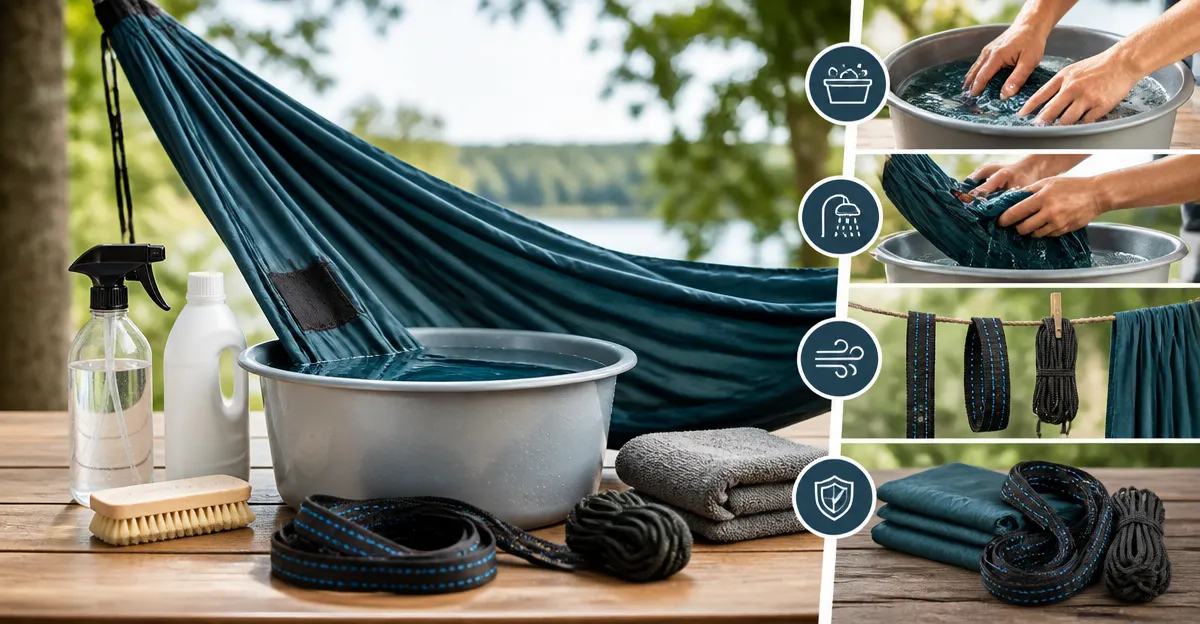
How to Sanitize Hammock Gear: Step‑by‑Step Guide to Cleaning & Disinfecting Hammocks, Straps & Suspension
Introduction
One will learn how to properly clean and disinfect hammock fabric, tree‑friendly straps, carabiners and suspension ropes in this guide. Proper sanitation extends the service life of the equipment and reduces the risk of skin irritation or mold growth. The procedures described are applicable to a wide range of hammock styles, from lightweight nylon models to traditional rope hammocks. By following each step, one can maintain a safe and comfortable outdoor relaxation experience.
What You'll Need
- Mild liquid detergent or outdoor‑grade soap
- Isopropyl‑based disinfectant spray (70% concentration)
- Soft‑bristle brush
- Microfiber drying towel
- Well‑ventilated cleaning area
Optional tools include a portable washing bag and a UV‑light sanitizer for additional microbial control.
Step 1: Prepare the Workspace and Inspect the Gear
Before any cleaning begins, one should select a shaded, well‑ventilated area where the hammock can be spread flat without creasing. Inspect the fabric, straps and ropes for tears, frayed edges or foreign objects that could cause damage during washing. Remove all pockets, carabiners and any detachable hardware; these items will be cleaned separately to avoid water intrusion. This preparation reduces the likelihood of mold formation and ensures that each component receives targeted treatment.
For illustration, the Kootek Camping Hammock features 210T parachute nylon and D‑shaped carabiners that benefit from a thorough pre‑inspection. Priced at $23.99 with a 4.7‑star rating from 31,239 reviews, it exemplifies a lightweight hammock that is easy to lay out for cleaning.
Step 2: Hand‑Wash the Hammock Fabric
Fill a clean basin with lukewarm water and add a small amount of mild detergent; harsh chemicals can degrade the nylon fibers and reduce water‑repellent properties. Submerge the hammock fabric and gently agitate for one to two minutes, allowing the solution to penetrate the weave. Use a soft‑bristle brush to address stubborn stains, moving in the direction of the fabric grain to avoid fraying. Rinse thoroughly with cool water until no suds remain, then gently squeeze out excess water without wringing.
The SZHLUX Camping Hammock is constructed from the same 210T parachute material and benefits from this gentle hand‑wash method. At $15.99 and a 4.7‑star rating from 4,342 reviews, it provides a cost‑effective example of a hammock that retains softness after repeated cleaning.
Step 3: Disinfect Straps and Carabiners
After the fabric has been cleaned, focus on the tree‑friendly straps and carabiners, which can harbor bacteria from sweat and environmental debris. Spray an isopropyl‑based disinfectant evenly onto the straps, ensuring full coverage of the 18+1 loop system. Allow the solution to dwell for at least three minutes, which is sufficient to neutralize most pathogens. For metal carabiners, immerse them briefly in the disinfectant solution, then wipe with a microfiber towel to remove residual liquid.
The Wise Owl Kids Camping Hammock includes reinforced straps and high‑quality carabiners designed for easy clipping. Priced at $25.90 with a 4.8‑star rating from 52,637 reviews, this model demonstrates how durable hardware tolerates routine disinfection without corrosion.
Step 4: Clean and Condition Suspension Ropes
Suspension ropes, whether nylon or cotton, require a different approach because they can absorb moisture and become a breeding ground for mold. Dampen a soft brush with a diluted detergent solution and scrub each rope segment, paying special attention to the woven sections where dirt accumulates. Rinse the ropes with clean water, then lay them flat on a drying towel in a shaded area. To restore flexibility, one may apply a light rope‑conditioning oil once the ropes are dry; this prevents stiffness that could affect load distribution.
The Castaway Double Rope Hammock uses 8 mm hand‑woven cotton rope, making it an ideal candidate for this conditioning step. At $99.99 with a 4.2‑star rating from 2,905 reviews, it illustrates how high‑density rope benefits from periodic oiling to maintain comfort.
Step 5: Dry Completely and Store Properly
After cleaning, one must ensure that all components are completely dry before storage to avoid mildew. Hang the hammock fabric on a wide‑branch or a portable drying rack, allowing air to circulate on both sides for at least four hours. Straps and ropes should be coiled loosely and placed in a breathable mesh bag rather than a sealed plastic container. Store the cleaned hammock in its attached carry sack, which protects it from dust while preserving its compact shape.
The SUNCREAT Quilted Hammock includes an attached sack and a spreader bar; at $64.89 with a 4.4‑star rating from 2,404 reviews, it demonstrates how integrated storage solutions simplify post‑cleaning organization.
Tips & Pro Tips
- Always empty pockets before cleaning; metal objects can puncture the fabric during washing.
- Test any disinfectant on a small, inconspicuous area of the fabric to confirm that colourfastness is maintained.
- For high‑altitude camping, consider a UV‑light sanitizer as an additional step to neutralize spores that survive liquid disinfectants.
- When cleaning cotton rope, avoid excessive moisture; over‑soaking can weaken the hand‑woven lattice.
Troubleshooting
Problem: Persistent odor after washing.
Solution: Soak the hammock in a mixture of one part white vinegar to four parts water for 30 minutes, then rinse and dry.
Problem: Stiff fabric after drying.
Solution: Lightly mist the dry fabric with a fabric‑softening spray designed for outdoor nylon, then tumble briefly on low heat inside a mesh laundry bag.
Conclusion
One now possesses a systematic approach to sanitizing hammock gear, encompassing preparation, fabric washing, hardware disinfection, rope conditioning and proper storage. Regular maintenance safeguards the structural integrity of the hammock, preserves comfort and reduces the likelihood of skin irritation. By applying the recommended steps and selecting suitable products, outdoor enthusiasts can enjoy a clean and reliable hammock season after season.
Products Mentioned in This Guide
Frequently Asked Questions
What type of detergent should I use to clean a hammock?
Use a mild liquid detergent or an outdoor‑grade soap that is free of harsh chemicals and bleach.
How do I disinfect hammock straps and ropes safely?
Spray a 70% isopropyl‑based disinfectant onto the fabric, let it sit for a minute, then wipe with a clean microfiber towel.
Can I wash a nylon hammock in a washing machine?
Yes, on a gentle cycle with cold water and mild detergent; avoid high spin speeds to prevent damage.
How often should I clean and sanitize my hammock gear?
Clean after each use if it gets dirty, and deep‑sanitize at least once a month or after exposure to mold‑prone environments.
What is the best way to dry a hammock after cleaning?
Lay it flat in a well‑ventilated, shaded area and pat it dry with a microfiber towel, allowing it to air‑dry completely before storage.