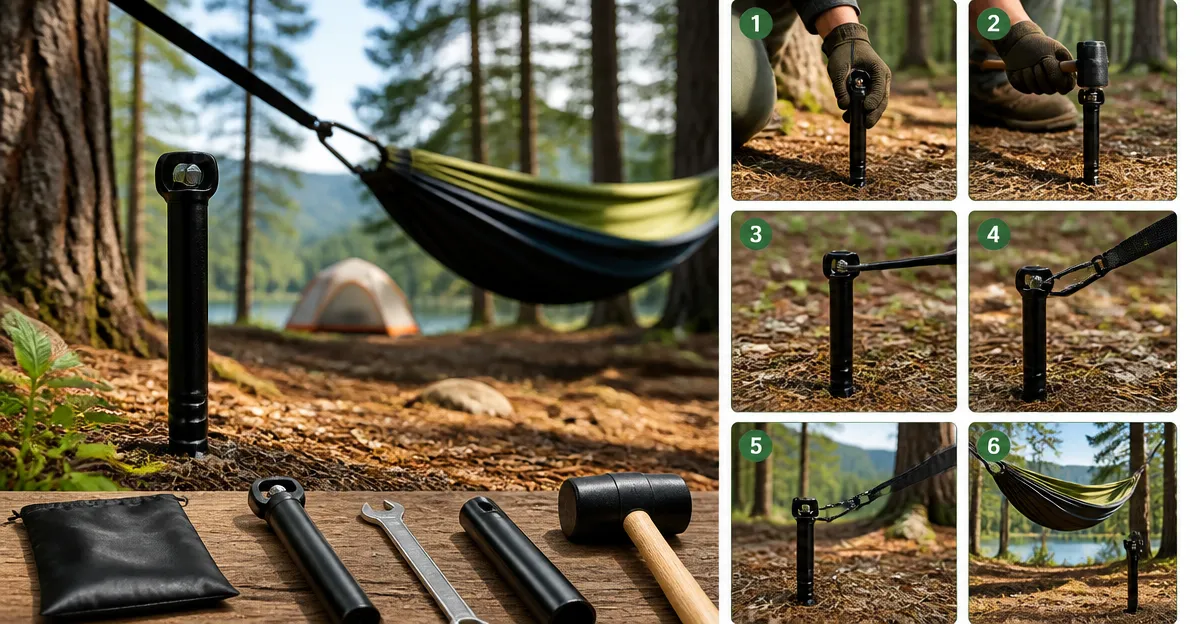
How to Install Artificial Hammock Anchors at Campsites: Step-by-Step DIY Guide for Safe, Secure Hammock Setup
Introduction
One will learn how to create a reliable hammock suspension system without damaging natural trees. The guide explains the preparation, installation, and verification phases in a logical sequence. By following the steps, the reader can enjoy a comfortable hammock while preserving the campsite environment. The value of this knowledge lies in increased safety, reduced setup time, and compliance with park regulations.
What You'll Need
The essential materials include two heavy‑duty hammock straps, a pair of carabiners, a sturdy hammock, a measuring tape, and a utility knife. Optional items such as a portable ladder, a tree protection pad, and a tension gauge can improve accuracy. All of the required tools are lightweight and designed for backpacking, ensuring that the overall load remains manageable.
Step 1: Locate Suitable Anchor Points
One should first survey the campsite for trees or sturdy structures that can bear at least 500 pounds combined. The ideal anchor possesses a trunk diameter between 6 and 12 inches and is free of rot or large cracks. If natural trees are unavailable, a portable metal pole or a campsite shelter frame may serve as an artificial anchor. Verify that the chosen point complies with local regulations, as many parks prohibit permanent hardware.
When a tree is selected, measure the distance between the two anchor points. This measurement will determine the length of strap required and whether additional extension loops are necessary. Record the distance to the nearest centimeter to avoid guesswork later in the process.
Step 2: Prepare the Hammock Straps
Unfold the Wise Owl Outfitters 10ft Hammock Tree Straps and inspect the stitching for any signs of wear. Each strap is constructed from no‑stretch polyester webbing and supports up to 500 pounds when both straps are used together. The 38 built‑in loops allow precise tension adjustments, which is essential for maintaining a level hammock.
If the campsite conditions are particularly wet, wipe the straps with a dry cloth to remove moisture that could reduce friction. Clip the included carabiners onto the loops closest to the ends of each strap; this will enable a knot‑free attachment method that saves time and reduces the risk of improper knots.
Step 3: Attach Straps to the Anchor Points
Wrap each strap around the selected tree trunk at a height that matches the desired hammock clearance, typically 4 to 5 feet above ground. The 1‑inch wide design minimizes bark damage and satisfies most park regulations regarding tree protection. Slide the strap over the trunk, then feed the free end through the carabiner and pull tight.
For artificial anchors such as metal poles, use the daisy‑chain design of the Grand Trunk Hammock Tree Straps. The 36 adjustment points allow the strap to be secured to irregular shapes without the need for additional hardware. Ensure that the strap lies flat against the anchor to prevent slipping under load.
Step 4: Connect the Hammock to the Straps
Thread the hammock’s end loops through the nearest strap loops, then clip the opposite hammock end to the corresponding strap on the other side. The strong yet portable nature of both strap models ensures that the connection will not fail under typical recreational loads. Adjust the hammock’s hanging angle to approximately 30 degrees for optimal comfort and load distribution.
Use the built‑in loops on the Wise Owl straps to fine‑tune the tension. Pull the strap through successive loops until the hammock sags no more than 12 inches when unoccupied. This adjustment prevents excessive swing and reduces the risk of sudden drops.
Step 5: Verify Load Capacity and Safety
Before occupying the hammock, perform a static load test by applying gradual pressure equal to the combined weight of the intended user and any gear. Observe the straps for any signs of stretching or slipping. Both strap systems are rated for 400 to 500 pounds total, providing a generous safety margin for most campers.
If the straps remain secure, sit gently in the hammock and shift weight side to side. Listen for any creaking noises that could indicate insecure anchor points. Once confidence is established, the hammock is ready for regular use.
Tips & Pro Tips
- Always carry a small utility knife to trim excess webbing and prevent snagging.
- When using the Wise Owl straps, keep the carabiners oriented with the gate facing away from the hammock to avoid accidental opening.
- Apply a tree‑friendly pad made of recycled rubber under the strap if the bark appears fragile.
- For extended trips, store the straps in the included carry pouch to protect them from UV exposure and dirt.
Troubleshooting
Problem: The strap slides down the tree after a few minutes of use.
Solution: Re‑thread the strap through a higher loop and tighten using the built‑in tension adjustment. Verify that the carabiner gate is fully closed.
Problem: The hammock sags excessively despite tension adjustments.
Solution: Check that the anchor points are at the correct height and distance. If the distance is greater than the strap length, consider adding a short extension strap or using a longer model.
Conclusion
One has learned how to select appropriate anchor points, prepare heavy‑duty straps, attach them securely, and verify the safety of the hammock system. By following the step‑by‑step instructions, the reader can enjoy a comfortable, secure hammock while preserving the natural environment. The guide encourages responsible camping practices and highlights the advantages of using high‑quality accessories.
Products Mentioned in This Guide
Frequently Asked Questions
What are artificial hammock anchors and why use them at campsites?
Artificial hammock anchors are strap‑based suspension points that attach to trees without harming bark, allowing safe hammock setup while preserving the environment.
Which materials are essential for installing artificial hammock anchors?
You need two heavy‑duty hammock straps, two carabiners, a sturdy hammock, a measuring tape, and a utility knife; optional ladder, protection pad, and tension gauge improve ease and accuracy.
How do I protect trees when using artificial hammock straps?
Wrap the strap around the tree trunk and use a tree‑protection pad or a wide strap to distribute pressure, preventing bark damage.
What is the correct tension for a secure hammock setup?
Aim for about 30‑45 lb of tension per strap, which can be checked with a tension gauge or by ensuring the hammock forms a 30‑degree angle at its center.
Are artificial hammock anchors allowed in most national parks?
Many parks permit strap‑based anchors that don’t damage trees, but always check specific regulations before setting up.