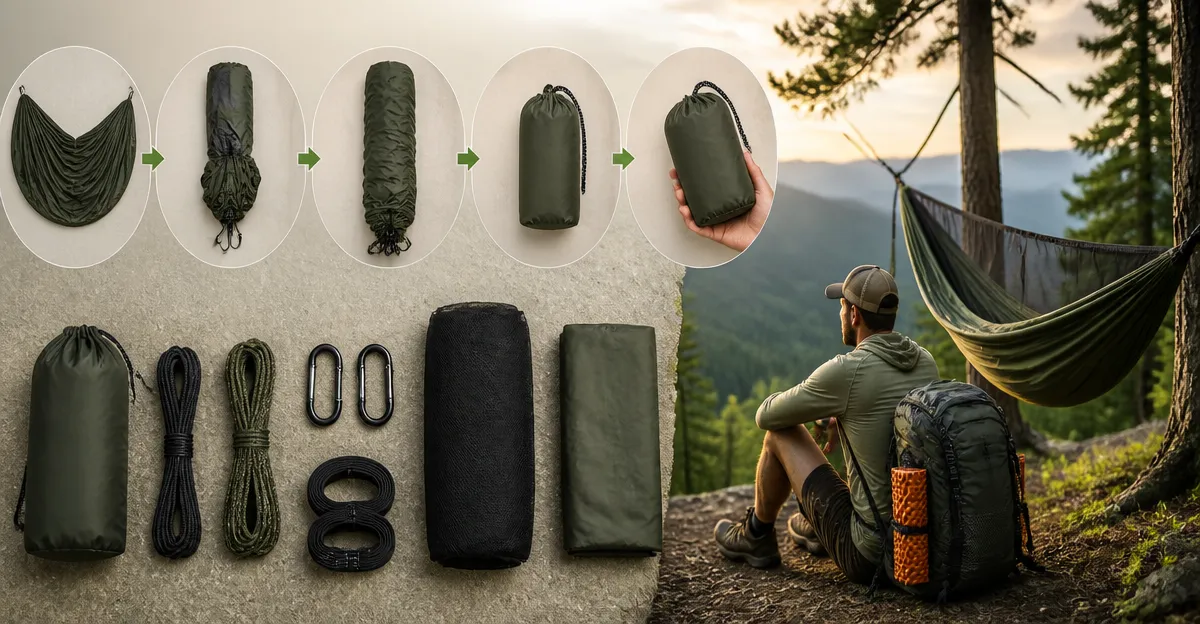
Introduction
Thru‑hikers require equipment that can be deployed in seconds, especially when weather changes or a campsite is limited. This guide explains how to pack a hammock so that it can be unrolled, hung, and enjoyed without delay. Readers will learn the optimal packing order, the rationale behind each step, and which lightweight products simplify the process. By following these instructions, one can conserve energy, reduce setup time, and maintain comfort throughout long‑distance treks.
What You'll Need
- A portable hammock (e.g., SZHLUX Camping Hammock or Wise Owl Camping Hammock)
- Tree‑friendly straps or carabiners (included with most hammocks)
- A compact stuff sack or carry bag
- A lightweight tarp or rainfly (optional for weather protection)
- Micro‑fiber cleaning cloth and a small zip‑lock bag for spare parts
Step 1: Choose the Right Hammock for Thru‑Hiking
The first decision influences every subsequent step. A hammock that balances weight, durability, and capacity is essential. The SZHLUX Camping Hammock weighs only 1.8 lb, folds to a 6.2 × 4.7 × 3 in package, and supports up to 400 lb, making it ideal for solo or duo hikers who prioritize minimal bulk. Its 210T parachute fabric resists tearing and dries quickly, which reduces moisture‑related weight. For hikers needing a higher weight limit, the Wise Owl Camping Hammock offers a 500 lb capacity while still weighing just 24 oz, thanks to ultralight nylon and a built‑in stuff sack.
Both models include adjustable tree straps that eliminate the need for knots, preserving tree bark and simplifying setup. Selecting a hammock with integrated straps saves space because separate rope or webbing is unnecessary.
Step 2: Prepare Your Straps and Carabiners
Before folding the hammock, inspect the straps for fraying and ensure the carabiners click securely. The SZHLUX model provides two 10‑ft straps with 18+1 loops, allowing fine‑tuned height adjustments without additional knots. The Wise Owl version supplies 9‑ft straps with a five‑loop system that slides smoothly along the rope, reducing friction. Arrange the straps in a “U” shape with the loops facing outward; this orientation prevents tangling when the hammock is compressed.
Place the carabiners at the ends of the straps, oriented so the gate faces away from the hammock fabric. This prevents accidental opening during transport and makes the final attachment step intuitive.
Step 3: Fold the Hammock in a Consistent Pattern
Consistent folding reduces bulk and speeds up deployment. Begin by laying the hammock flat, face‑down. Fold it lengthwise so the top and bottom edges align, creating a narrow rectangle about 12 in wide. Next, perform a “tri‑fold” by folding one third of the rectangle over the middle, then folding the remaining third over that layer. This creates a compact bundle that slides easily into the stuff sack.
For the SZHLUX hammock, the included carry bag measures 6.2 × 4.7 × 3 in, perfectly matching the folded dimensions. Insert the folded hammock, then tuck the pre‑arranged straps and carabiners on top of the bundle. The Wise Owl hammock already includes a built‑in stuff sack that folds around the same size bundle, eliminating the need for a separate bag.
Step 4: Pack the Straps Around the Bundle
Wrap the straps around the hammock bundle in a figure‑eight pattern. Start by placing the middle of the strap under the bundle, then bring each end over the top and loop them back under the opposite side. This method secures the hammock without compressing the fabric excessively, preserving its loft for quick setup. The loops on the SZHLUX straps make this process intuitive; simply slide each loop over the corresponding strap end.
After wrapping, tuck the excess strap length into the side pockets of the stuff sack (if present) or coil it neatly beside the hammock. This prevents the strap from shifting during backpack movement, which could cause noise or wear.
Step 5: Optimize Weight Distribution in Your Pack
Place the hammock package near the center of your backpack, close to your spine. This positioning balances the load and reduces fatigue on long ascents. If you are carrying additional gear such as a tarp or sleeping pad, position the hammock on top of those items to keep the heaviest components low. The lightweight nature of both the SZHLUX and Wise Owl hammocks means they add less than 2 lb to the overall pack weight, preserving the overall carry efficiency.
Secure the hammock package with the internal compression straps of your backpack. A snug fit prevents the bundle from rattling against other items, which could cause wear on the straps or fabric over time.
Step 6: Perform a Quick Pre‑Trip Check
Before setting out on the trail, open the stuff sack and verify that the hammock, straps, and carabiners are all present and undamaged. Test the strap loops by pulling them gently; they should slide smoothly without catching. If any component feels compromised, replace it before the hike begins. A brief check takes less than a minute but can prevent a delayed setup at a critical moment.
Finally, close the sack and zip it tightly. The zip lock ensures that moisture does not enter the bag, protecting the parachute fabric from mildew during rainy days.
Tips & Pro Tips
- Tree Selection: Choose trees with a diameter between 4‑12 in for optimal strap length. The SZHLUX straps can be shortened without re‑tying, while the Wise Owl straps adjust automatically.
- Height Adjustment: Hang the hammock so the lowest point is approximately 18 in off the ground when seated. This height provides a comfortable sitting position and reduces the risk of ground contact during sleep.
- Rain Protection: Carry a lightweight tarp (e.g., a 3‑mil silicone‑coated tarp) and attach it to the same straps using the spare loops. This creates a quick shelter without adding significant weight.
- Nighttime Setup: Use a headlamp with a red filter to preserve night vision while threading the straps.
- Maintenance: After each multi‑day trek, rinse the hammock with a small amount of water and allow it to air dry before repacking. The 210T fabric of the SZHLUX hammock dries in under an hour on a sunny day.
Troubleshooting
| Problem | Solution |
|---|---|
| Straps slip during setup | Ensure the loops are fully seated on the strap ends and that the figure‑eight wrap is tight. If slipping persists, add a small piece of rubber tubing over the strap ends for extra friction. |
| Hammock feels saggy | Check that the straps are not over‑extended; shorten them using the built‑in adjustment loops. Also verify that the hammock is not overloaded beyond its rated capacity. |
| Moisture retained in fabric | Hang the hammock in direct sunlight for 30‑45 minutes after use. The quick‑dry parachute material of both recommended hammocks expels moisture rapidly. |
Conclusion
By selecting a lightweight, durable hammock, arranging straps methodically, folding the fabric in a repeatable pattern, and packing the bundle centrally, one can achieve instant deployment on any thru‑hike. The steps outlined above reduce setup time to under one minute, preserve energy for the trail, and ensure comfort during rest periods. Applying the tips and troubleshooting advice will further enhance reliability, allowing hikers to focus on the journey rather than gear complications.
Products Mentioned in This Guide
Frequently Asked Questions
What is the optimal order for packing a hammock for fast deployment on a thru‑hike?
Start with the hammock folded lengthwise, roll it tightly, then place it in a compact stuff sack followed by any tarp or rainfly, and finish with straps and accessories in a separate zip‑lock bag.
Which lightweight hammock models are recommended for thru‑hiking?
The SZHLUX Camping Hammock and Wise Owl Camping Hammock are popular choices because they combine durability with a low pack‑out weight.
Do I need a separate tarp or rainfly when packing my hammock?
A lightweight tarp or rainfly is optional but useful for weather protection and can be folded and stored on top of the rolled hammock in the stuff sack.
How can I keep my hammock setup time under a minute?
Use tree‑friendly straps or carabiners that stay attached to the hammock, pre‑measure your hang points, and practice the roll‑and‑unroll sequence before hitting the trail.
What small accessories should I pack with my hammock for maintenance?
Include a micro‑fiber cleaning cloth and a zip‑lock bag for spare parts like buckles or repair tape to keep the hammock clean and functional on long trips.