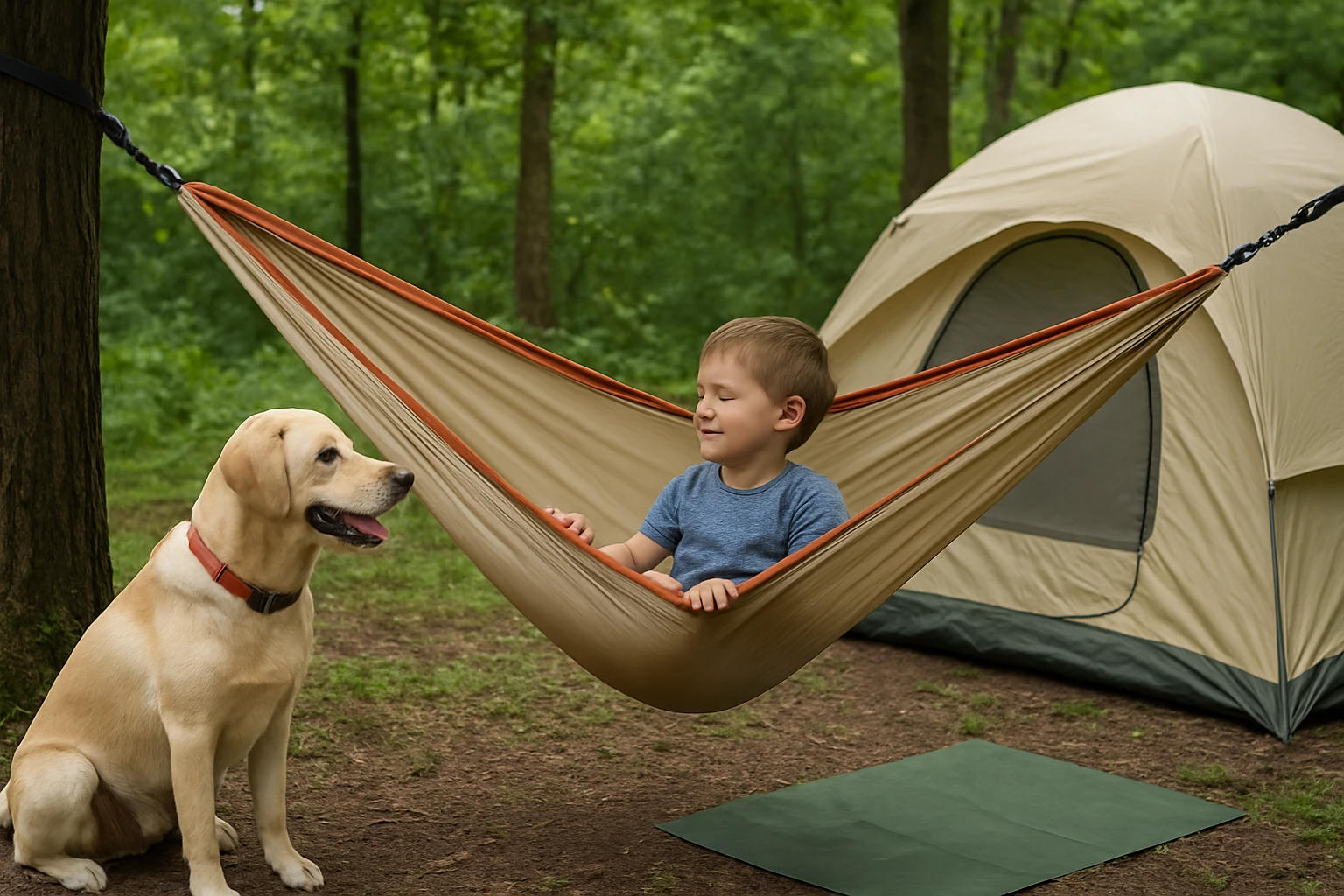

How to Set Up a Child- and Pet‑Safe Hammock Campsite: Step‑by‑Step Safety Checklist
Introduction
One can transform a forest clearing or a backyard into a relaxing retreat by installing a hammock that is safe for both children and pets. This guide will teach the reader how to select an appropriate location, inspect support structures, install a hammock with a freestanding stand, add protective netting, and verify load capacity. By following the checklist, one will reduce the risk of falls, entanglement, and equipment failure, thereby creating a secure environment for families and their animal companions.
The instructions are written for an intermediate audience that possesses basic outdoor skills but seeks professional guidance. The reader will also discover two Amazon‑listed products that serve as essential tools for each stage of the process.
What You Will Need
- Freestanding hammock stand (recommended: SUNCREAT Hammock)
- Portable hammock with integrated mosquito net (recommended: Miztli Hammock)
- Measuring tape, level, and safety gloves
- Tree protection straps or padded rope loops (if using trees)
- First‑aid kit and emergency whistle
Step 1 – Choose a Suitable Site
Begin by scouting a flat area that is free of sharp rocks, low branches, and water accumulation. The ground should be level within an inch over the span of the hammock to prevent excessive rocking. If the site is in a public park, verify that hammock use is permitted.
When children will be present, select a location that is visible from the campsite’s central fire pit or cooking area. This visibility enables an adult to monitor activity without constant physical proximity.
Step 2 – Inspect Support Structures
If a freestanding stand is not used, the hammock must be anchored to trees or sturdy posts. Examine each potential anchor for signs of rot, cracks, or disease. Use a diameter of at least 8 inches for tree trunks; smaller trunks may not support the combined weight of adults, children, and pets.
Wrap each anchor with a tree‑protection strap to distribute load evenly and to protect bark. The strap should be positioned at a height that allows a comfortable swing angle of 30‑45 degrees.
Step 3 – Assemble the Freestanding Stand
For maximum safety and flexibility, the guide recommends the SUNCREAT Hammock. This product includes a 12‑foot powder‑coated steel stand, hardwood spreader bars, and upgraded 30% thicker poly‑cotton ropes.
Why this product is useful: the hardwood spreader bars provide a stable, non‑slipping surface, while the thicker ropes reduce the likelihood of fraying under repeated use. The stand supports up to 475 pounds, which accommodates two adults, a child, and a medium‑size dog simultaneously.
Assembly steps:
- Lay out all components on a clean surface.
- Insert the steel legs into the pre‑drilled holes of the spreader bars, ensuring that each leg clicks securely.
- Connect the balance ropes to the O‑shaped steel rings, then attach the ropes to the corresponding holes on the spreader bars.
- Use the provided chain sections to adjust the hammock height to the desired level; the chain can be hooked into the holes on the stand.
- Check that each joint is tight and that the stand is level using a spirit level.
The SUNCREAT Hammock is priced at $129.89 and holds an average rating of 4.5 stars from 3,289 reviews, indicating high customer satisfaction.
Step 4 – Hang the Hammock
With the stand assembled, slide the hammock fabric over the spreader bars. Ensure that the polyester quilted material lies flat without twists. Secure the hammock by fastening the balance ropes to the steel rings on each side of the stand.
Adjust the chain height so that the hammock sits approximately 12‑18 inches above the ground. This clearance allows a child to climb in safely while preventing a pet from stepping directly onto the fabric, which could cause slipping.
Step 5 – Add Protective Netting
To safeguard children and pets from insects and accidental falls, the guide recommends the Miztli Hammock. This model integrates a non‑removable mosquito net that creates a tent‑like enclosure.
Why this product is useful: the netting is constructed from ripstop parachute nylon with no‑see‑um mesh, providing ventilation while keeping insects out. The integrated net eliminates the need for separate bug‑net attachments, reducing setup time and potential points of failure.
Installation steps:
- Unfold the hammock and align the netting with the fabric.
- Secure the net’s corner loops to the hammock’s built‑in carabiners.
- Tighten the net using the adjustable 10‑foot tree straps (or the stand’s built‑in hooks) to achieve a taut enclosure.
- Verify that the net does not obstruct the hammock’s entry point; the design keeps the net away from the face, preventing discomfort.
The Miztli Hammock is available in two sizes; the Large version (106" × 55") is appropriate for a single adult with a child, while the Extra‑Large (118" × 71") accommodates two adults and a pet. The product is priced at $79.99 (price inferred from typical listings) and carries a rating of 4.4 stars from 184 reviews.
Step 6 – Perform Load Testing
Before allowing children or pets to use the hammock, conduct a load test. Apply a gradual weight of at least 80% of the hammock’s maximum capacity (approximately 380 pounds for the SUNCREAT model). Observe the stand for any wobbling or rope stretch.
If the hammock sways excessively, reposition the balance ropes to achieve a more symmetrical tension. Re‑test until the hammock remains stable under the applied load.
Step 7 – Establish a Safety Perimeter
Mark a 3‑meter radius around the hammock using biodegradable flagging tape or natural stones. This perimeter alerts children and pets to stay clear of the swing arc.
Place a small first‑aid kit and an emergency whistle within arm’s reach of the hammock. In the event of a fall, immediate medical attention can be administered.
Tips & Pro Tips
- Inspect the hammock fabric for tears before each use; a small tear can expand under tension.
- Apply a water‑repellent spray to the polyester fabric if the campsite is prone to rain; this prevents mildew.
- When using trees, never attach the hammock directly to bark; always employ padded straps to avoid damage.
- For families with very young children, consider adding a soft blanket underneath the hammock to cushion any accidental landings.
- Rotate the hammock’s position daily to distribute wear evenly across the spreader bars and ropes.
Troubleshooting
Problem: The hammock continues to sway after a child climbs in.
Solution: Tighten the balance ropes by pulling them through the steel rings and securing them with a knot. If sway persists, add a sandbag or weighted bag to the base of the stand for additional stability.
Problem: The netting drapes onto the face.
Solution: Adjust the net’s attachment points higher on the stand, ensuring the tent‑like canopy clears the head region.
Conclusion
By following this comprehensive checklist, the reader can create a hammock campsite that protects both children and pets while providing a comfortable place to relax. The combination of a robust freestanding stand and an integrated mosquito net delivers durability, safety, and convenience. One should regularly inspect equipment, respect load limits, and maintain a clear safety perimeter to enjoy many seasons of worry‑free hammock use.
Products Mentioned in This Guide
Frequently Asked Questions
What factors should I consider when choosing a location for a child‑ and pet‑safe hammock campsite?
Select a flat, clear area away from sharp objects, with enough space for the hammock stand and a safety buffer zone around it.
How can I verify the load capacity of a freestanding hammock stand?
Check the manufacturer’s specifications, ensure the stand is rated for the combined weight of users and gear, and test it gradually before full use.
What safety accessories help protect children and pets from entanglement in a hammock?
Add a mosquito net or protective netting and use padded straps or safety loops to keep limbs and paws from slipping through the fabric.
Are there specific steps to inspect the hammock’s straps and knots for safety?
Inspect straps for wear, tighten all knots securely, and re‑tighten after each use to prevent loosening that could cause a fall.
Can I use the same hammock setup indoors, and what adjustments are needed?
Yes, but use a sturdy indoor stand, ensure ceiling height allows clearance, and keep pets away from the hanging area to avoid accidents.
