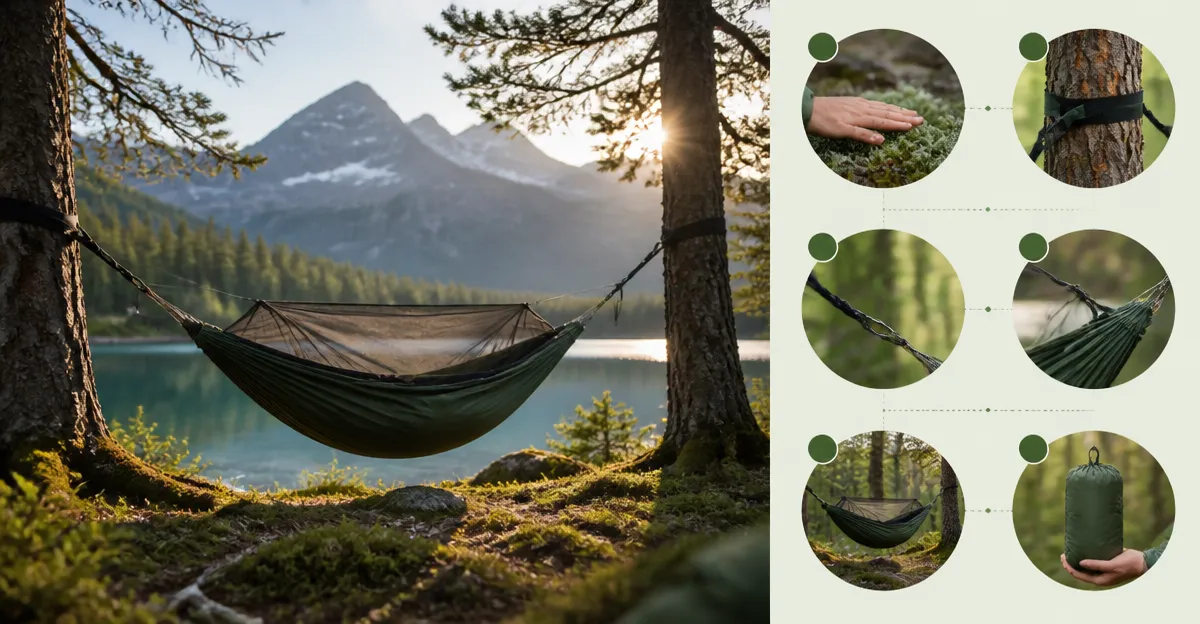
How to Set Up a Low‑Impact Hammock Site in Fragile Ecosystems: A Step‑by‑Step Leave No Trace Guide
Setting up a hammock in a delicate environment can be rewarding and responsible when the proper techniques are applied. This guide teaches readers how to select a site, protect vegetation, and use equipment that minimizes ecological disturbance. By following each step, one can enjoy the comfort of a hammock while preserving the natural integrity of the area. The information is valuable for hikers, backpackers, and anyone who wishes to practice low‑impact outdoor recreation.
What You Will Learn
Readers will understand how to assess terrain, identify suitable trees, and employ tree‑friendly hardware. The guide explains why each piece of equipment is essential and how it reduces impact compared with traditional methods. Practical advice on packing, setting up, and packing out ensures compliance with Leave No Trace principles. At the end of the article, a concise product list provides ready‑to‑purchase options for the recommended tools.
What You’ll Need
- A lightweight, durable hammock (e.g., PUPTILY Camping Hammock)
- Tree‑friendly straps or a portable hammock stand (Tranquillo Hammock Stand)
- Carabiners and additional rope for securing the hammock
- Packable tarp or groundsheet for protecting the forest floor
- Small repair kit (tape, spare knots, etc.)
Step 1: Locate a Low‑Impact Site
The first task is to find a location that offers both shade and a clear view while avoiding high‑traffic areas. Walk along established trails and look for mature trees spaced at least 12‑15 feet apart; this distance supports a comfortable hammock swing without excessive tension. Choose a site away from water sources to prevent soil erosion and protect aquatic habitats. By selecting a spot that is already disturbed, such as a previously used campsite, you reduce the need for new foot traffic.
Step 2: Evaluate Tree Health and Choose Anchor Points
Inspect the prospective anchor trees for signs of disease, rot, or thin bark, as these conditions increase the risk of damage. Favor trees with a diameter of at least 6 inches and a smooth, sturdy trunk that can support weight without cracking. Avoid using saplings, young growth, or trees with low branches that could be broken during setup. When possible, use the hammock’s built‑in straps, which distribute load evenly and prevent gouging.
For sites where suitable trees are absent or where tree protection is a priority, a portable stand provides a non‑invasive alternative. The Tranquillo Hammock Stand is constructed from powder‑coated steel, supports up to 600 lb, and features rubber‑footed legs that minimize ground impact. Its patented tool‑free design allows assembly in under 30 seconds, making it ideal for fragile alpine meadows or desert scrub where tree removal is prohibited.
Step 3: Prepare Tree‑Friendly Straps or Stand
If trees are available, attach the hammock using the included nylon straps or dedicated tree‑friendly straps. The SZHLUX Camping Hammock includes 10‑foot adjustable straps with 18+1 loops, allowing precise height adjustment without tying knots that could scar bark. These straps spread the load across a larger surface area, reducing pressure points and preventing long‑term damage.
When using the Tranquillo stand, unfold the steel legs, position the unit on level ground, and lock the height adjustment knobs. The stand’s non‑slip rubber feet protect the soil, and its ball‑bearing joints ensure a smooth, noise‑free swing. This solution eliminates any direct contact with trees, which is especially important in protected wilderness zones where tree‑damage penalties may apply.
Step 4: Hang the Hammock Correctly
Thread the hammock’s suspension lines through the chosen anchor points, ensuring a 30‑degree angle between the lines and the ground. This angle provides optimal comfort and reduces the force exerted on the trees or stand. Use a simple knot such as a bowline or a tension‑adjusting knot to secure the lines; both are easy to release and do not damage hardware.
The PUPTILY Camping Hammock is rated for 600 lb, features a double‑layer parachute design, and weighs only $15.99, making it an affordable, low‑impact choice. Its breathable nylon fabric dries quickly, and the included tree straps simplify setup while protecting bark. For larger groups, the SZHLUX double hammock supports up to 400 lb and offers a spacious 106.3" × 55.1" sleeping area, ideal for families or friends sharing a campsite.
Step 5: Minimize Environmental Impact While Using the Hammock
During use, keep the hammock at a height of 5‑6 feet to avoid contact with low‑lying vegetation and to reduce the chance of accidental falls. Do not hang the hammock over fragile moss or lichens; instead, aim for sturdy trunks or the stand. If you notice any abrasion on bark, relocate the hammock to a new anchor point to allow the tree to recover.
Leave no equipment behind. Pack out all straps, carabiners, and any debris. Use a lightweight tarp underneath the hammock only when necessary, and ensure it does not trap moisture against the forest floor, which could encourage fungal growth.
Step 6: Disassemble and Pack Out Efficiently
When it is time to leave, loosen all knots, remove straps or stand components, and fold the hammock back into its carry bag. The PUPTILY hammock folds into a compact stuff sack that fits easily in a backpack, and the Tranquillo stand collapses into a transport bag included in the package. Store all hardware in a dry place to prevent rust and prolong product life.
Before departing, perform a quick visual inspection of the trees and ground to confirm that no damage has occurred. If you notice any broken branches or disturbed soil, take a moment to restore the area by repositioning rocks or spreading leaf litter.
Tips & Pro Tips
- Always test the load capacity of your hammock and straps before full weight is applied.
- Use a lightweight mosquito net (included with the Covacure Camping Hammock) to protect against insects without needing additional chemicals.
- Carry a small repair kit; a few minutes of patching can prevent a ruined trip.
- When using a stand, place a thin groundsheet beneath it to distribute weight on soft soil.
- Practice knot tying at home so you can adjust tension quickly in the field.
Troubleshooting
| Problem | Solution |
|---|---|
| Hammock sags too low | Raise the anchor points or tighten the straps; ensure the angle is close to 30 degrees. |
| Straps slip on bark | Wrap a piece of cloth or use rubberized strap sleeves to increase friction. |
| Stand wobbles on soft ground | Spread a small tarp under the legs or add a lightweight sandbag for stability. |
Conclusion
By following this step‑by‑step, low‑impact method, one can enjoy the serenity of a hammock while preserving fragile ecosystems. The combination of tree‑friendly straps, a portable stand, and a durable hammock creates a reliable system that respects Leave No Trace ethics. Remember to assess the site, protect trees, and pack out all equipment. With practice, setting up a hammock becomes a seamless part of any backcountry adventure.
Products Mentioned in This Guide
Frequently Asked Questions
How can I choose a low‑impact hammock site in a fragile ecosystem?
Look for already‑fallen or dead trees, avoid root zones, stay 10‑15 ft from water, and set the hammock at a 30‑degree angle.
What tree‑friendly hardware should I use to protect vegetation?
Use wide‑strap webbing or padded tree straps with rubber padding and avoid nails, screws, or rope that can scar bark.
How do I set up a hammock with minimal ground disturbance?
Place a lightweight tarp or footprint under the hammock, keep gear off the soil, and pack out all trash and leftover materials.
What are the key Leave No Trace principles for hammock camping?
Travel on durable surfaces, respect wildlife, minimize fire impact, and always pack out everything you bring.
Which lightweight hammock and accessories are recommended for low‑impact use?
A 10‑12 ft ripstop nylon hammock paired with 30‑inch padded tree straps and a compact tarp offers comfort while reducing ecological impact.