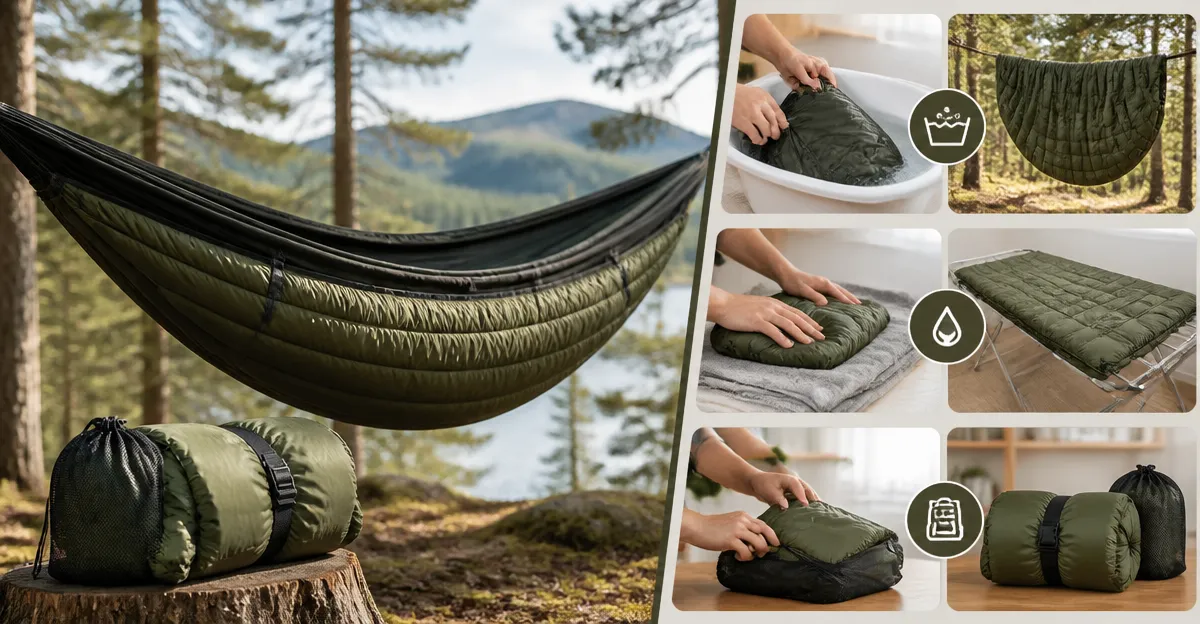
How to Store and Maintain Your Underquilt: Cleaning, Drying, and Packing Tips for Long-Lasting Insulation
Introduction
Anyone who spends time sleeping in a hammock knows that the underquilt is the most critical component for warmth. Proper maintenance ensures that the insulation retains its loft, the water‑resistant coating remains effective, and the fabric does not deteriorate prematurely. This guide explains how to clean, dry, and pack an underquilt so that it remains reliable for many camping seasons. Readers will learn practical steps, recommended tools, and pro tips that protect both performance and investment.
What You’ll Need
- Mild, non‑abrasive detergent (such as a technical wash for synthetic fabrics)
- Large clean bathtub or basin
- Soft brush or sponge
- Drying rack or clean indoor space with good airflow
- Compression stuff sack (included with most underquilts)
- Optional: Wise Owl Outfitters Hammock Underquilt – provides a high‑quality example of a well‑designed underquilt with a sturdy compression sack.
Step 1: Inspect the Underquilt Before Cleaning
Before any cleaning occurs, the user should examine the entire surface for tears, loose stitching, or missing elastic cords. Look closely at the reinforced stitching along the edges, as this area bears the most stress when the underquilt is tightened. If any damage is found, repair it with a fabric patch or replace the affected elastic loops to prevent heat loss. The inspection also confirms that the water‑resistant coating is intact, which is especially important for the Wise Owl Outfitters Hammock Underquilt, rated 4.7 stars and praised for its durability.
Step 2: Clean the Underquilt Properly
Cleaning removes dirt, body oils, and any residual moisture that can degrade synthetic fill. Fill a bathtub or large basin with lukewarm water and add a small amount of mild detergent; avoid harsh chemicals that can strip the DWR (Durable Water Repellent) coating. Submerge the underquilt gently, allowing it to soak for five minutes, then use a soft brush to agitate the surface without scrubbing aggressively. Rinse thoroughly with clean water until no suds remain. For a product that exemplifies easy maintenance, consider the OneTigris Hideout Hammock Underquilt (price $37.98, rating 4.6). Its 210t Terylene shell and 300t polyester lining respond well to gentle washing, preserving the loft of the 700 g fill.
Step 3: Dry the Underquilt Thoroughly
After washing, the underquilt must be dried completely to avoid mold and loss of insulation efficiency. Gently squeeze excess water without wringing, as twisting can damage the internal fill. Hang the underquilt on a wide drying rack in a shaded, well‑ventilated area; direct sunlight can degrade the synthetic fibers and weaken the DWR coating. Allow at least 12 hours for full drying, flipping the quilt midway to ensure even airflow. The AYAMAYA Hammock Underquilt (price $39.99, rating 4.5) benefits from this method because its 20D ripstop nylon shell and cotton‑polyester blend retain shape when dried slowly.
Step 4: Pack the Underquilt for Long‑Term Storage
Proper packing protects the underquilt from compression set and environmental damage. First, roll the underquilt loosely, starting at one end and maintaining the natural shape of the fill. Place the rolled quilt into its compression stuff sack, then gently compress using the built‑in straps until the desired size is reached. Store the compressed sack in a cool, dry location away from direct sunlight and chemicals. The onewind Double Hammock Underquilt (price $69.99, rating 4.6) includes a double‑sided compression bag that exemplifies efficient storage; its bio‑based Sorona insulation remains resilient when packed correctly.
Tips & Pro Tips
- Apply a DWR spray after cleaning if the water‑repellent finish appears diminished; this restores the protective barrier without affecting insulation.
- When traveling in humid climates, place a silica‑gel packet inside the compression sack to absorb residual moisture.
- For rapid drying in cold weather, use a low‑heat setting on a portable dryer for a few minutes, but never exceed 40 °C to avoid melting synthetic fill.
- Rotate the underquilt in storage each season to prevent permanent compression in one area.
- Keep the elastic cords and bungee loops free of debris; a small brush can remove sand or grit that otherwise reduces tension.
Troubleshooting
Problem: The underquilt feels less warm after several uses.
Solution: Check the loft of the fill by gently shaking the quilt; if the fill appears flattened, re‑fluff it by hand and ensure it is fully dry before repacking. Persistent loss of warmth may indicate a compromised DWR coating; re‑apply a spray treatment.
Problem: Water seepage during rain.
Solution: Verify that the water‑resistant coating is still functional by sprinkling a few drops of water on the outer surface; if the water beads, the coating is effective. If water spreads, treat the surface with a DWR product or consider a waterproof hammock tarp in addition to the underquilt.
Conclusion
Maintaining an underquilt requires careful inspection, gentle cleaning, thorough drying, and thoughtful packing. By following the steps outlined above, the user can preserve the insulation, extend the lifespan, and ensure consistent performance in a wide range of temperatures. The recommended products illustrate how quality materials and thoughtful design simplify each maintenance task. Proper care transforms an underquilt from a seasonal accessory into a reliable companion for every hammock adventure.
Products Mentioned in This Guide
Frequently Asked Questions
How often should I clean my underquilt?
Clean the underquilt after every 3–5 trips or whenever it becomes visibly dirty or smells, to preserve loft and water‑resistance.
What type of detergent is safe for underquilts?
Use a mild, non‑abrasive detergent formulated for technical synthetic fabrics; avoid bleach and fabric softeners.
What is the best way to dry an underquilt after washing?
Lay it flat on a drying rack or a clean indoor space with good airflow, avoiding direct sunlight and high heat to prevent coating damage.
How should I pack my underquilt to maintain its loft?
Store it loosely in its compression stuff sack without over‑compressing; for long‑term storage, keep it in a breathable bag at room temperature.
Can I machine‑wash an underquilt, and if so, how?
If the manufacturer permits, use a gentle cycle with cold water, a mild detergent, and no spin‑dry; rinse thoroughly and air‑dry.