Introduction
People who suffer from scoliosis or other spinal conditions often seek gentle, supportive ways to relax outdoors. This guide explains how hammock suspension systems can be adapted to provide safe, ergonomic support for a compromised spine. Readers will learn the underlying biomechanics, how to evaluate material quality, and which products deliver the most reliable performance. The article also presents a detailed product recommendation, a comparison matrix, and actionable tips for everyday use.
Background/Context
The human spine relies on balanced load distribution to maintain alignment and reduce pain. When a person with scoliosis lies in a hammock, the suspension points create a three‑dimensional tension that can either alleviate or exacerbate curvature. Therefore, understanding the concepts of load capacity, stretch resistance, and attachment geometry is essential before selecting a suspension system. In addition, the environment—whether a forest trail, a backyard, or a rooftop—determines the type of anchor points that are available.
Understanding Suspension Mechanics
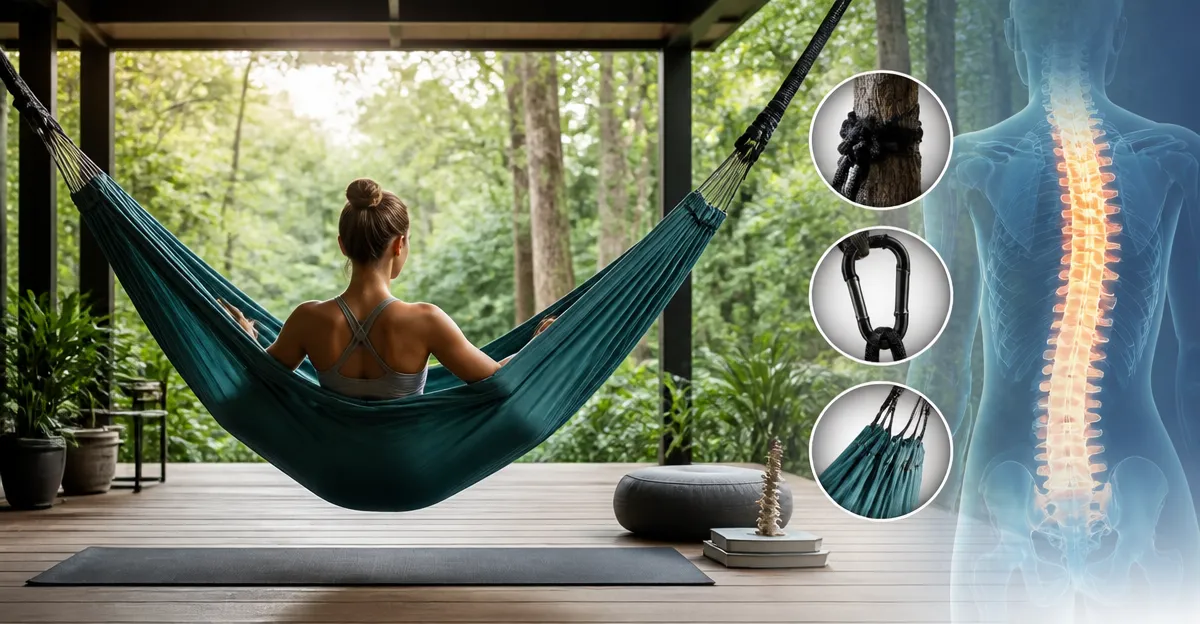
Hammock suspension involves two primary forces: the vertical load exerted by the body and the horizontal tension required to keep the hammock level. A high‑quality strap must resist elongation under load, otherwise the hammock will sag and place uneven pressure on the lumbar region. Materials such as polyester webbing are preferred because they exhibit minimal stretch while remaining lightweight. The number of attachment loops also matters; multiple loops allow fine‑tuning of height and angle, which can be used to create a more neutral spinal posture.
Choosing the Right Material
Most suspension straps are made from either nylon or polyester. Nylon offers superior abrasion resistance but tends to stretch over time, which can compromise spinal support. Polyester, especially when triple‑stitched, provides a near‑zero stretch characteristic that maintains a consistent hanging angle. For individuals with scoliosis, a no‑stretch strap ensures that the hammock remains at the intended height throughout the session, reducing the risk of sudden dips that could trigger discomfort.
Product Recommendations
Among the many options on the market, the Foxelli XL Hammock Straps stand out for their combination of length, load capacity, and portability. The straps measure a total of 20 feet when combined, providing ample reach for anchors spaced up to 20 feet apart. Each strap is rated for 1,000 lbs, delivering a combined capacity of 2,000 lbs, which exceeds the requirements for most adult users and adds a safety margin for dynamic movement. Constructed from high‑density, triple‑stitched polyester webbing, the straps remain completely free of stretch, ensuring that the hammock retains its ergonomic angle throughout use.
Additional features of the Foxelli XL Hammock Straps include 40 hammock attachment loops and two dedicated tree‑attachment loops, allowing precise height adjustment. The set weighs only 0.66 lbs and folds into a compact carrying bag, making it ideal for backpacking, camping, or travel. Although carabiners are not included, the design accommodates standard 1‑inch locking carabiners, which can be purchased separately. With a rating of 4.8 out of 5 stars from 7,586 reviewers, the product has demonstrated consistent reliability and customer satisfaction.
Comparison/Selection Guide
| Criteria | Foxelli XL Hammock Straps | Typical Nylon Strap (e.g., 15 ft) | Heavy‑Duty Steel Cable |
|---|---|---|---|
| Length (combined) | 20 ft | 15 ft | 10 ft |
| Maximum Load | 2,000 lbs | 1,200 lbs | 3,000 lbs |
| Stretch | None (polyester, no‑stretch) | Moderate (nylon) | None (steel) |
| Weight | 0.66 lbs | 0.85 lbs | 1.2 lbs |
| Portability | Fits in small bag | Bulkier | Heavier, less flexible |
| Price (USD) | $13.77 | $12.50 | $25.00 |
| Customer Rating | 4.8/5 (7,586 reviews) | 4.2/5 (2,134 reviews) | 4.5/5 (1,021 reviews) |
The table illustrates why the Foxelli XL Hammock Straps are especially suitable for individuals with spinal concerns. The extra length provides flexibility in anchor placement, while the no‑stretch polyester guarantees a stable suspension angle. The lightweight design also reduces the effort required to set up and break down the system, which can be beneficial for users with limited mobility.
Best Practices & Tips
- Choose anchor points that are at least 12 inches above the ground to allow a gentle decline of 30‑35 degrees, which promotes spinal alignment.
- Use the 40 attachment loops to fine‑tune the height of each side of the hammock, ensuring that the hips remain level and the lumbar curve is supported.
- Inspect the webbing for signs of fraying before each use; replace any compromised strap immediately to maintain safety.
- Pair the straps with a hammock that has a supportive spreader bar; this combination distributes weight evenly across the back.
- When camping, attach the straps to sturdy trees using a protective tree guard to prevent bark damage and to preserve the integrity of the anchor.
Frequently Asked Questions
1. Can hammock straps help reduce back pain for scoliosis?
Yes, when the suspension system maintains a consistent angle and distributes weight evenly, it can relieve pressure on the lumbar vertebrae and reduce muscular tension.
2. How many attachment loops are necessary for proper spinal support?
Using multiple loops on each side allows micro‑adjustments; at least two loops per side are recommended to achieve a balanced height.
3. Are the Foxelli straps compatible with all hammock models?
The straps are designed to be universally compatible with any hammock that uses standard 1‑inch attachment points, making them a versatile choice.
4. What is the recommended weight limit for a single adult?
Each strap supports up to 1,000 lbs, so a single adult well below this limit can use the system safely; the combined capacity of 2,000 lbs provides ample margin.
5. Do I need additional carabiners?
Carabiners are not included, but standard 1‑inch locking carabiners are compatible and recommended for secure attachment.
Conclusion
Selecting a hammock suspension system that prioritizes no‑stretch material, ample length, and high load capacity can make a significant difference for individuals with scoliosis or other spinal conditions. The Foxelli XL Hammock Straps provide an optimal blend of safety, portability, and ergonomic adjustability, earning them a high rating among outdoor enthusiasts. By following the best‑practice guidelines outlined in this guide, readers can enjoy the therapeutic benefits of hammock relaxation while minimizing the risk of spinal strain.
Products Featured in This Guide
Foxelli XL Hammock Straps
Price: $13.77
Rating: 4.8/5.0 (7,586 reviews)
Why featured: Provides extra‑long, no‑stretch polyester webbing with a 2,000 lb combined capacity, ideal for maintaining a stable, ergonomic hammock angle for users with scoliosis.