Introduction
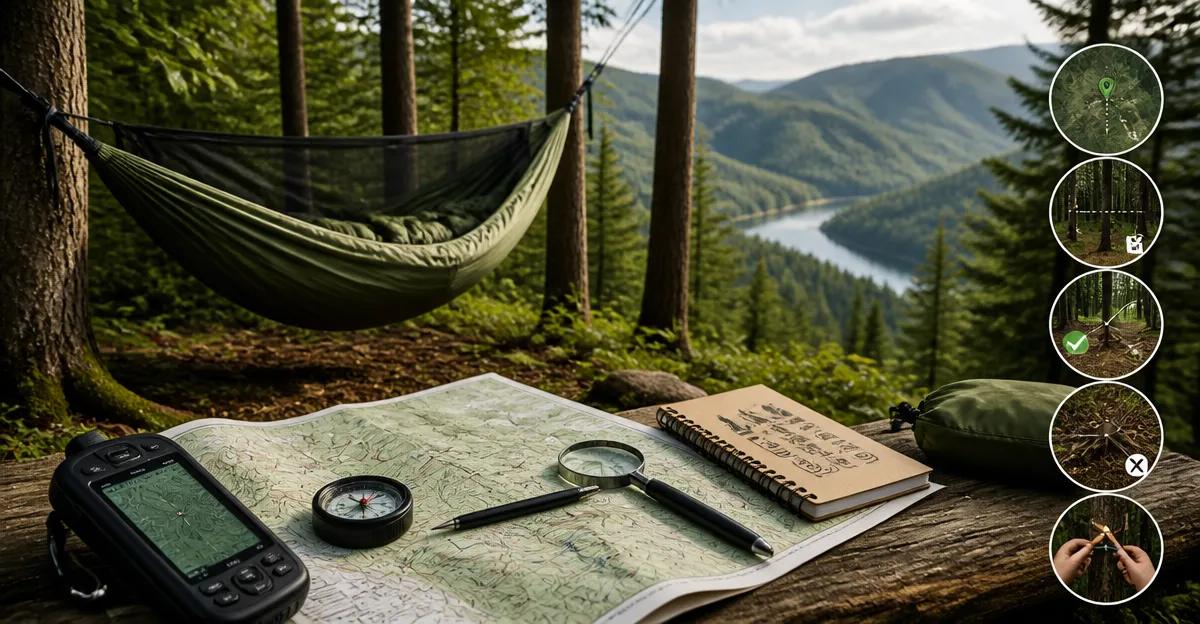
In this guide the reader will learn how to locate, evaluate, and map hammock campsites while adhering to Leave No Trace principles. The process emphasizes minimal environmental impact, safety, and repeatable documentation for future outings. By following the outlined steps one can enjoy the comfort of a hammock without compromising the integrity of natural areas. The information presented is valuable for both novice and experienced outdoor enthusiasts seeking responsible camping practices.
What You’ll Need
- Topographic map or GPS device for navigation.
- Tree‑friendly straps and carabiners (recommended product appears in Step 4).
- Compact notebook or digital app for site notes.
- Lightweight rain protection for weather‑proof mapping (recommended product appears in Step 6).
- Pen or waterproof writing instrument.
1. Review Leave No Trace Regulations and Local Policies
The first step is to become familiar with the seven Leave No Trace principles and any specific campsite regulations governing the area. Many public lands require permits for hammock use, restrict tree‑strap placement, or prohibit camping in certain zones. Consulting the managing agency’s website or visitor center ensures compliance and prevents unintentional violations. Understanding these rules before arrival reduces the risk of fines and preserves the wilderness for other users.
2. Identify a Suitable Pair of Trees
Selecting the right trees is critical for safety, comfort, and environmental stewardship. Ideal trees are healthy, mature, and have a trunk diameter between 4 and 12 inches, providing sufficient strength for a hammock load. Use a measuring tape or the circumference of the tree to verify suitability, and avoid trees with visible disease, rot, or excessive bark loss. Choosing trees spaced 10 to 15 feet apart allows most hammocks to achieve a proper sag without excessive tension.
3. Map the Site Using Natural Landmarks
Before installing any equipment, create a mental or sketched map of the surrounding terrain. Note prominent features such as water sources, rock formations, and trail intersections that will aid in future navigation. Record the azimuth (compass bearing) of the tree line to assist with re‑location, and capture the slope gradient to evaluate drainage. This documentation forms the foundation of a low‑impact campsite that can be revisited without disturbing new areas.
4. Install Tree Straps and Hang the Hammock
With the tree pair confirmed, attach tree‑friendly straps to each trunk using the built‑in loops. The straps should be positioned at a height that allows the hammock to hang with a 30‑degree angle at its lowest point, providing optimal comfort and load distribution. Clip the carabiners onto the straps and then connect the hammock suspension cords. For a spacious and durable option the Kootek Double Camping Hammock is recommended; it offers a 500 lb capacity, lightweight 210T parachute nylon construction, and integrated tree‑friendly straps that simplify setup. Priced at $26.99 with a 4.7‑star rating, this hammock combines strength and portability, making it an ideal tool for mapping and enjoying a double‑person campsite.
5. Assess Environmental Impact and Adjust
After the hammock is secured, evaluate the site for potential impact on vegetation, soil, and wildlife. Ensure that the straps do not gouge bark, and that the hammock does not rest directly on delicate ground cover. If necessary, reposition the straps a few inches higher or lower to distribute weight more evenly. This step reinforces the Leave No Trace principle of minimizing trace, and it also enhances the longevity of both the hammock and the trees.
6. Protect the Site with Weather‑Resistant Gear
In many regions weather conditions can change rapidly, and a rain‑proof shelter helps maintain a dry environment for mapping equipment. The Sunyear Hammock with Rain Fly provides a comprehensive kit that includes a waterproof tarp, netting, and reinforced straps. Priced at $49.99 with a 4.6‑star rating, this system adds a rain‑fly that can be deployed over the hammock while mapping, protecting notes and electronic devices from moisture. Its 210T parachute nylon material matches the durability of the hammock itself, ensuring consistent performance across all components.
7. Document the Site for Future Visits
Using the notebook or digital app, record the GPS coordinates, tree species, strap placement height, and any observations about wind exposure or shade patterns. Include a sketch that marks the hammock’s orientation relative to the sun’s path, which assists in selecting the most comfortable sleeping direction. Photographs taken from multiple angles provide visual reference and help verify that the site remains undisturbed over time. This thorough documentation enables responsible reuse and supports community knowledge sharing.
Tips & Pro Tips
- Carry a small pocket knife to trim excess strap loops for a cleaner profile.
- Use a lightweight tarp from the Sunyear kit as a groundsheet to protect delicate flora when taking notes.
- When camping in high‑traffic areas, rotate hammock locations to distribute wear evenly across the landscape.
- Consider a single‑person hammock such as the Wise Owl Single Camping Hammock for solo mapping trips; its 400 lb capacity and 24‑oz weight make it exceptionally portable.
Troubleshooting
- Straps slip on smooth bark: Add a small piece of rope or cloth between the strap and bark to increase friction.
- Hammock sags excessively: Raise the attachment points or shorten the suspension cords to achieve a steeper angle.
- Rain fly tears during heavy downpour: Reinforce seams with waterproof tape and ensure the tarp is fully tensioned.
Conclusion
By following these steps one can responsibly map hammock campsites while adhering to Leave No Trace ethics. The guide demonstrates how to select trees, install equipment, assess impact, protect against weather, and create lasting documentation. Utilizing quality tools such as the Kootek Double Camping Hammock, Wise Owl Single Camping Hammock, and Sunyear Hammock with Rain Fly enhances safety and efficiency without compromising environmental stewardship. Readers are encouraged to apply these practices on their next adventure, contributing to the preservation of natural spaces for future generations.
Products Mentioned in This Guide
Frequently Asked Questions
What are the key Leave No Trace principles to follow when hammock camping?
Follow the seven principles: plan ahead, travel and camp on durable surfaces, dispose of waste properly, leave what you find, minimize campfire impact, respect wildlife, and be considerate of other visitors.
Do I need a permit to set up a hammock campsite?
Many public lands require a permit or have specific rules for hammock use, so always check local regulations before you go.
What equipment is essential for mapping hammock campsites?
A topographic map or GPS, tree‑friendly straps and carabiners, a waterproof notebook or app, and a pen or waterproof writing tool are essential.
How can I ensure my hammock straps don’t damage trees?
Use wide, tree‑friendly straps, place them at a proper height, and avoid tightening them too much to prevent bark injury.
What’s the best way to document a campsite for future trips?
Record GPS coordinates, note tree species and strap placement, and jot down any site-specific observations in a compact notebook or digital app.