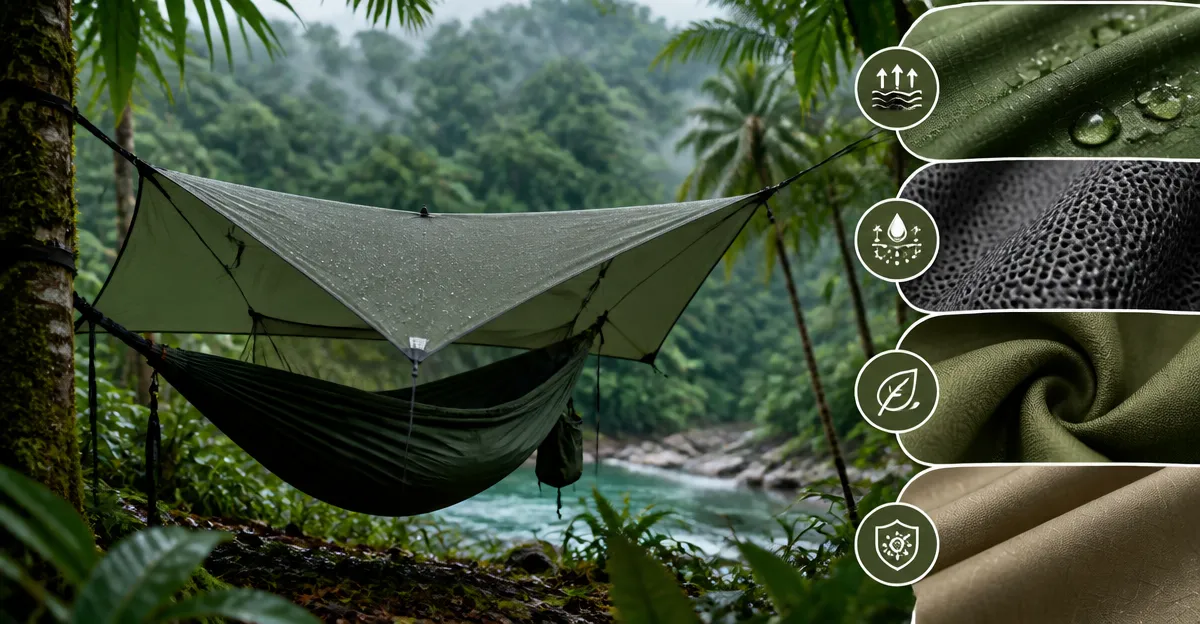
Ultimate Guide to Breathable Hammock Tarp Fabrics for Tropical Humidity
Introduction
When camping in tropical regions, the combination of heat and moisture creates a demanding environment for hammock tarps. This guide explains how to select fabrics that resist mold, wick away moisture, and remain breathable under high humidity. Readers will learn fundamental fabric science, evaluate two highly rated products, and receive actionable tips for long‑term durability. By the end of this article, one will be equipped to make an informed purchase that enhances comfort and protects gear.
Background and Context
Fabrics used for hammock tarps must balance three competing properties: water resistance, breathability, and resistance to fungal growth. Water resistance is measured by a hydrostatic head rating, commonly expressed in millimeters (mm). A rating of 3000 mm indicates that the material can withstand a three‑meter column of water before leaking. Breathability is quantified by the moisture‑vapor transmission rate (MVTR); higher values allow sweat and ambient humidity to escape, reducing condensation inside the shelter. Mold resistance is achieved through treatments that inhibit fungal spores, often by incorporating antimicrobial agents or by selecting synthetic fibers that do not provide a food source for mold.
In tropical climates, daytime temperatures frequently exceed 30 °C while relative humidity remains above 80 %. Under these conditions, a non‑breathable tarp can trap heat, leading to uncomfortable sweating and accelerated mold growth. Selecting a fabric that moves moisture outward while still shedding rain is therefore essential for a pleasant hammock experience.
Key Fabric Technologies
Two primary synthetic fibers dominate the hammock‑tarp market: nylon and polyester. Nylon offers superior strength‑to‑weight ratios and can be coated with silicone or polyurethane (PU) to improve water resistance. Polyester is naturally more UV‑stable and tends to resist stretching when wet. Both fibers can be treated with a silicone coating that creates a hydrophobic surface, allowing water droplets to bead and roll off.
Another important technology is the use of a mesh layer made from no‑see‑um (fine‑mesh) material. This mesh provides insect protection while allowing air to circulate, thereby reducing internal humidity. When combined with a waterproof outer layer, the result is a hybrid tarp that offers protection from rain, insects, and mold.
Product Recommendations
The following products exemplify the principles discussed above. Each product has been selected for its proven performance in humid environments, high customer ratings, and features that align with the guide’s criteria.
Preself Hammock Screen House
Preself Hammock Screen House provides a lightweight, ultralight, and sturdy solution for tropical camping. The tarp is constructed from nylon coated with silicone, delivering a waterproof rating of up to 3000 mm PU. The total package weight is only 2.9 lb, making it easy to carry on long hikes. The design includes full‑length no‑see‑um mesh walls that keep insects out while allowing airflow, and three zipper sliders on each door facilitate hammock attachment. Users rate the product 4.5 out of 5 stars based on 93 reviews, praising its quick setup and effective bug protection.
Pro Venture Hex Hammock Rain Fly
Pro Venture Hex Hammock Rain Fly features a 12 ft by 9 ft asymmetrical hex shape that maximizes coverage during heavy rain. The fabric is PU 3000 Diamond Ripstop Nylon, offering the same 3000 mm waterproof rating as the Preself model. At 1.8 lb, it is even lighter and folds into a compact stuff sack measuring 10 × 5 × 5 inches. The package includes six 3‑meter guy lines with tensioners and four aluminium stakes for rapid deployment. Customer feedback averages 4.6 out of 5 stars from 777 reviews, highlighting its durability, ease of setup, and reliable rain protection.
Comparison and Selection Guide
| Feature | Preself Hammock Screen House | Pro Venture Hex Hammock Rain Fly |
|---|---|---|
| Weight | 2.9 lb | 1.8 lb |
| Dimensions | Fits a standard picnic table; dimensions not specified | 12 ft × 9 ft hex |
| Waterproof Rating | PU 3000 mm | PU 3000 mm |
| Mesh Integration | Full‑length no‑see‑um mesh walls | No mesh; pure tarp |
| Setup Accessories | Guy lines, adjustable skirt, zipper sliders | Six guy lines, tensioners, four stakes |
| Price | $82.00 | $29.99 |
| Rating | 4.5/5 (93 reviews) | 4.6/5 (777 reviews) |
Choosing between these two options depends on specific priorities. If insect protection and a larger interior space are essential, the Preself model offers integrated mesh and a roomier layout. If minimal weight and rapid deployment are paramount, the Pro Venture rain fly provides a lighter package with a streamlined hex shape. Both fabrics share a high waterproof rating, ensuring reliable rain protection in tropical storms.
Best Practices and Tips for Tropical Use
- Inspect the tarp after each rainy outing for signs of water pooling; reposition guy lines to promote runoff.
- Apply a silicone spray to the exterior surface annually to restore hydrophobic properties and improve water shedding.
- When storing the tarp, ensure it is completely dry; fold it loosely and keep it in a breathable sack to prevent mold growth.
- Combine the tarp with a breathable hammock liner made of polyester to manage internal condensation without sacrificing comfort.
- Use a tarp pole or ridge line to create a higher roof, allowing hot air to rise and exit, thereby increasing overall breathability.
Frequently Asked Questions
- What is the ideal MVTR for a hammock tarp in humid climates?
- An MVTR of at least 5000 g/m²/24 h is recommended to allow sufficient moisture vapor to escape while maintaining waterproof performance.
- Can I use a nylon tarp in direct sunlight without UV damage?
- Yes, if the nylon is coated with a UV‑stable polyurethane or silicone finish; otherwise, prolonged exposure may cause fabric degradation.
- How often should I treat my tarp with waterproofing spray?
- Re‑application every 6‑12 months is sufficient for most users, depending on frequency of use and exposure to harsh conditions.
- Is mesh compatible with a waterproof coating?
- Mesh sections are typically left uncoated to preserve airflow; however, the surrounding tarp can be coated, providing a balance between breathability and water resistance.
- Will a lighter tarp compromise durability?
- Not necessarily; modern ripstop weaves and high‑grade coatings provide durability comparable to heavier fabrics while reducing pack weight.
Conclusion
Breathable hammock tarp fabrics for tropical humidity must excel in water resistance, airflow, and mold inhibition. Understanding the underlying technologies—silicone‑coated nylon, PU 3000 mm ratings, and no‑see‑um mesh—enables one to evaluate products objectively. The Preself Hammock Screen House and Pro Venture Hex Hammock Rain Fly both meet these standards, yet they serve different priorities such as insect protection versus ultra‑lightweight portability. By following the best‑practice tips and selecting a tarp that aligns with personal camping style, one can enjoy comfortable, dry, and mold‑free hammock experiences in even the most demanding tropical environments.
Products Featured in This Guide
Preself Hammock Screen House
Price: $82.00
Rating: 4.5 out of 5 (93 reviews)
Featured because it combines a waterproof silicone‑coated nylon shell with full‑length no‑see‑um mesh, delivering both moisture resistance and insect protection for tropical camping.
Pro Venture Hex Hammock Rain Fly
Price: $29.99
Rating: 4.6 out of 5 (777 reviews)
Featured because its lightweight PU 3000 Diamond Ripstop Nylon construction provides reliable waterproofing in a compact hex shape, ideal for backpackers seeking minimal weight without sacrificing protection.