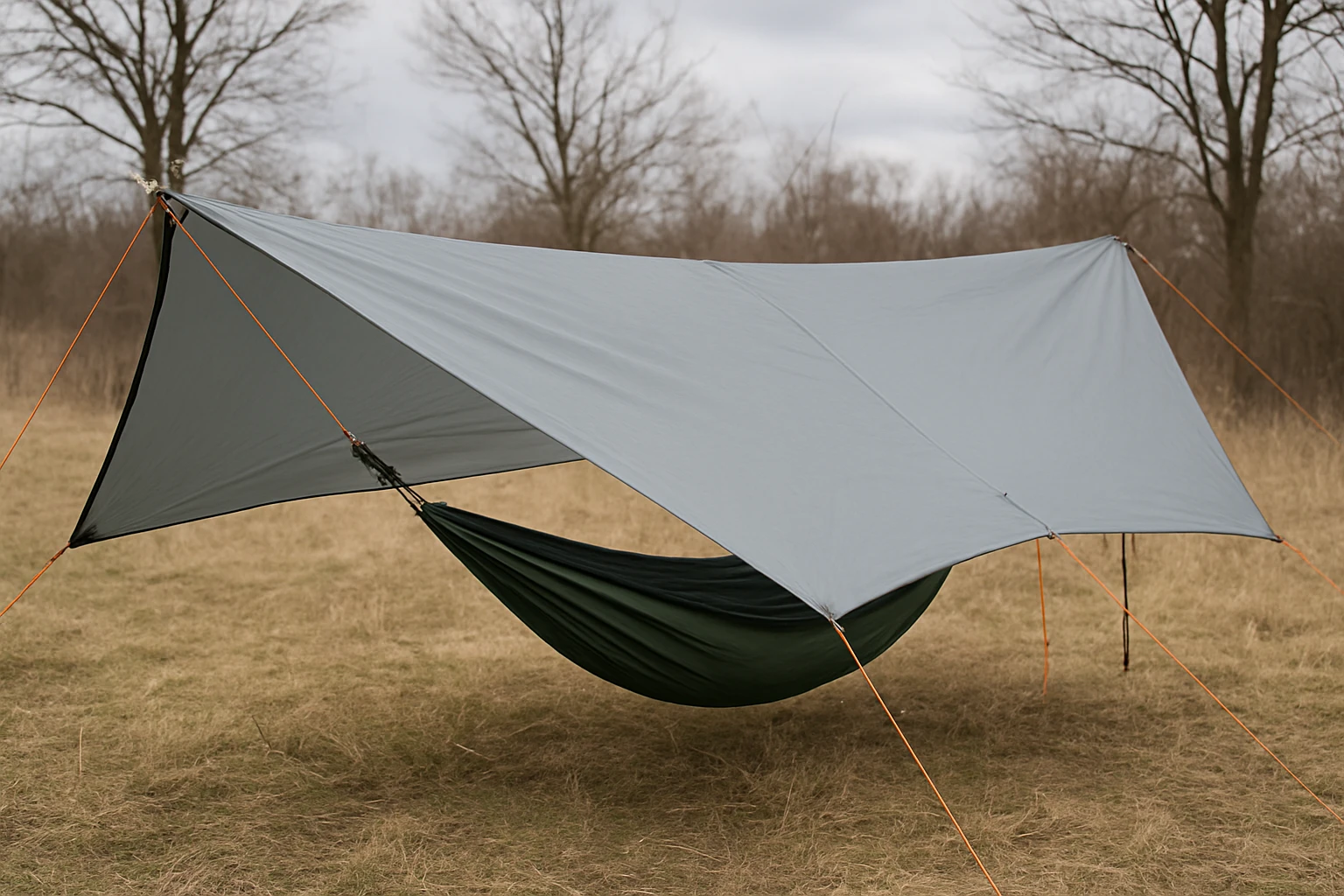
How to Pitch a Hammock Tarp in Windy Conditions: Step-by-Step Windproof Techniques
When the wind picks up, a poorly secured hammock tarp can become a safety hazard and a source of frustration. This guide teaches the reader how to create a stable, wind‑resistant shelter using proven techniques and carefully selected gear. By following each step, one will be able to enjoy a dry, comfortable hammock even when gusts threaten to blow the setup apart.
What You’ll Need
Before beginning, gather the following essential items. Each product listed below has been chosen for its performance in windy environments and is linked to its Amazon page for convenience.
- Gold Armour Rainfly Tarp – 12x10ft, 3,000mm waterproof rating, includes 8 tie‑down loops, guy lines, tensioners, and stakes. $26.99, 4.8/5 rating.
- Pro Venture Hammock Rain Fly – 12x9ft hex design, PU 3000 Diamond Ripstop Nylon, lightweight with built‑in accessories. $29.99, 4.6/5 rating.
- Onewind Hammock Tarp Sleeve – 12ft mesh sleeve for rapid deployment, 80 g weight, compact storage. $22.90, 4.7/5 rating.
- Unigear Waterproof Rain Fly – 9.8x9.8ft, 210D rip‑stop Oxford, PU 3000mm waterproof, includes stakes and ropes. $19.99, 4.5/5 rating.
- Additional paracord or lightweight rope, aluminum stakes, and a small mallet.
Step 1: Select a Protected Anchor Point
The first step is to locate two sturdy trees or posts that are spaced appropriately for the hammock length and provide natural windbreaks such as foliage or terrain. Choose trees with a diameter of at least 4 inches to ensure the anchor will not slip under tension. In windy conditions, a lower anchor height reduces the sail area of the tarp, thereby decreasing the force exerted by gusts.
When the chosen trees are identified, wrap a length of paracord around each trunk, leaving a loop for the hammock’s suspension straps. This loop will also serve as a point to attach the tarp’s tie‑down lines, creating a unified system that distributes wind load evenly.
Step 2: Hang the Hammock and Establish a Baseline Tension
Attach the hammock’s suspension straps to the prepared loops, then adjust the hammock until it hangs at a 30‑degree angle from each tree. This angle provides optimal comfort while limiting the amount of surface area exposed to the wind. Use a tensioning tool or a simple prusik knot to achieve consistent tension on both sides.
At this stage, the hammock itself acts as a windbreaker. However, a wind‑proof tarp must be added to protect the sleeping area from rain and lateral gusts.
Step 3: Deploy the Primary Tarp
Unfold the Gold Armour Rainfly Tarp and lay it over the hammock. The tarp’s 8 tie‑down loops allow multiple anchoring configurations, which is essential for wind resistance. Position the tarp so that the longer side runs parallel to the wind direction, creating a “lee side” that shields the hammock.
Attach the included 3‑meter guy lines to the tarp’s corners and to the tie‑down loops on the opposite side of the hammock. Use the tensioners to pull the lines tight, forming a low‑profile “A‑frame” that channels wind over the top rather than directly into the interior.
The Gold Armour Rainfly’s 3,000mm waterproof rating ensures that rain will bead off the surface, while its ripstop construction resists tearing under gusts.
Step 4: Reinforce with a Secondary Hex‑Shaped Tarp (Optional)
If the wind is particularly strong, add a secondary layer using the Pro Venture Hammock Rain Fly. Its hexagonal shape provides additional coverage on the windward side and distributes load across six reinforced grommets.
Clip the hex tarp’s grommets to the same anchor loops used for the primary tarp, then tension the six included guy lines. The lightweight PU 3000 Diamond Ripstop Nylon adds minimal weight while significantly increasing the overall wind‑shedding surface.
This configuration creates a “double‑wall” system: the inner Gold Armour tarp protects against rain, while the outer Pro Venture tarp acts as a windbreak, reducing turbulence inside the shelter.
Step 5: Secure the Tarp Sleeve for Rapid Adjustments
Attach the Onewind Hammock Tarp Sleeve to the front edge of the primary tarp using its cinched cords. The mesh design allows wind to pass through, preventing the tarp from acting like a sail.
When wind direction changes, slide the sleeve along the tarp to reposition the lee side without having to re‑tie all the guy lines. This feature saves time and reduces the risk of losing tension during a storm.
Step 6: Add Ground Stakes and Tensioners
Insert the aluminum stakes supplied with the Gold Armour or Unigear tarps into the ground at a 45‑degree angle, pointing away from the wind. Stake placement should be at least 2‑3 feet from the tarp edge to maximize leverage.
Run the remaining guy lines from the tarp’s lower corners to the stakes, then use the included tensioners to pull the lines taut. Proper tension eliminates flapping, which can degrade the tarp’s waterproof coating over time.
Step 7: Fine‑Tune the Angles and Tension
Adjust the angle of the tarp so that the windward edge is slightly higher than the leeward edge. This “lean‑away” configuration encourages airflow over the top of the shelter rather than forcing air underneath, which would create suction and potentially collapse the tarp.
Check each tie‑down loop and stake for slack. Even a small amount of looseness can amplify wind forces, especially when gusts exceed 20 mph.
Tips & Pro Tips
- Use a small piece of reflective tape on each tie‑down loop to locate them quickly in low light.
- In gusty conditions, add a “wind‑break pole” made from a lightweight trekking pole positioned perpendicular to the wind direction.
- When setting up at night, use a headlamp with a red filter to preserve night vision while checking tension.
- Consider a small tarp weight (e.g., a sandbag) placed at the center of the tarp to reduce movement.
- If the tarp material becomes saturated, shake it out before folding to prevent mold growth.
Troubleshooting
Problem: Tarp flaps in strong gusts.
Solution: Increase tension on all guy lines, add additional stakes, and ensure the windward edge is higher than the leeward edge.
Problem: Water pools in the center of the tarp.
Solution: Adjust the angle to create a steeper slope toward the leeward side, allowing water to run off the edges.
Problem: Tarp tears at a corner.
Solution: Reinforce corners with duct tape or replace the tarp with a higher‑denier material such as the Unigear Waterproof Rain Fly, which features double‑stitched reinforcement.
Conclusion
By following these systematic steps, the reader can transform a simple hammock into a wind‑proof, weather‑resistant shelter. The combination of a durable primary tarp, an optional hex‑shaped secondary tarp, and a versatile mesh sleeve provides flexibility for changing conditions. Proper anchoring, tensioning, and angle adjustment are the keys to maintaining stability when the wind blows.
With the right tools and techniques, one can enjoy a dry night’s sleep under the stars, regardless of how gusty the forecast may be. Practice the setup during calm weather to build muscle memory, then apply the same precision when the wind picks up.
Products Mentioned in This Guide
Frequently Asked Questions
How can I secure a hammock tarp to withstand strong winds?
Use multiple tie‑down loops, guy lines, and tensioners, anchor each corner with sturdy stakes, and add cross‑guy lines to distribute the load.
What type of tarp material is best for windy conditions?
A ripstop nylon with at least a 3000mm waterproof rating and reinforced edges, such as PU 3000 Diamond Ripstop, offers durability and wind resistance.
Should I use a hex‑shaped tarp or a rectangular one for wind?
Hex‑shaped tarps reduce wind pressure by allowing airflow through the center, making them more wind‑friendly than flat rectangles.
How do I tension a hammock tarp to prevent flapping?
Attach tensioners to the tarp’s tie‑down loops, pull the lines tight at a 45‑degree angle, and secure them to trees or stakes, then trim any excess slack.
Are additional accessories needed for extreme wind?
Adding sandbags or weighted stakes, using a windbreak pole, and securing extra guy lines can greatly improve stability in gusty weather.