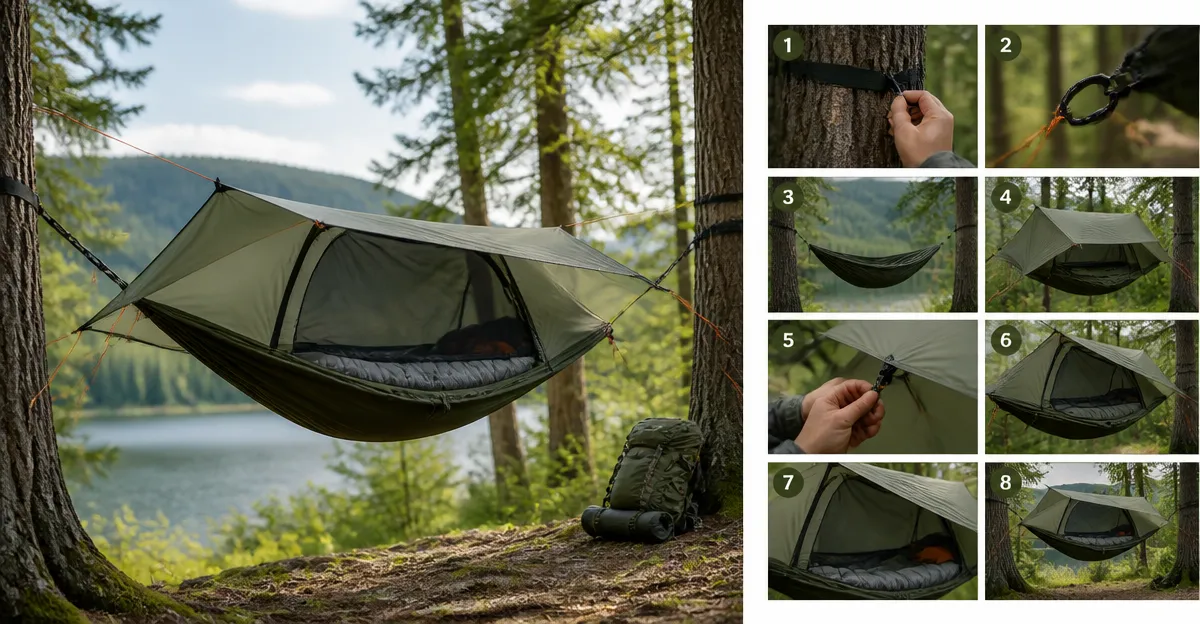
How to Set Up a Hammock‑Tent Hybrid Shelter: Step‑by‑Step Guide to Weatherproof, Comfortable Camping
Introduction
The modern camper seeks shelter that combines the lightweight freedom of a hammock with the protection of a tent. This guide explains how to create a hammock‑tent hybrid that resists rain, wind, and insects while providing a comfortable sleeping platform. Readers will learn site selection, anchoring techniques, tarp configuration, and interior enhancements. By following the instructions, one can enjoy a dry, cozy night in the wilderness without carrying a bulky traditional tent.
What You’ll Need
- Two sturdy trees or posts spaced 9‑12 feet apart.
- High‑quality hammock: SZHLUX Portable Hammock (rating 4.7/5 from 4,311 reviews).
- Adjustable tree‑friendly straps (included with the SZHLUX hammock).
- Weatherproof tarp or rainfly (optional but recommended for full protection).
- Bug net or integrated netting (the ENO JungleNest Hammock includes a stowable net).
- Carabiners, cordage, and stakes for securing the tarp.
- Lightweight sleeping pad and sleeping bag.
Step 1: Choose a Suitable Site
One should select a location that offers natural windbreaks such as a stand of trees or a rock formation. The ground must be level to prevent the hammock from sagging unevenly. Avoid low‑lying areas where water can pool during rainstorms. Ideally, the site provides two trees with diameters between 4 and 12 inches, allowing the straps to wrap securely without damaging bark.
Step 2: Prepare Tree Anchors and Straps
Begin by inspecting the chosen trees for rot or loose bark. Wrap a protective sleeve or a piece of old rope around each trunk to prevent abrasion. The SZHLUX Portable Hammock includes 10‑foot adjustable straps equipped with 18+1 loops, enabling precise height adjustment without tying knots. These straps distribute load evenly, reducing the risk of tree damage. Attach the straps to the tree sleeves, ensuring they are tight enough to hold the maximum weight rating of 400 lb.
Step 3: Assemble the Hammock Base
Thread the free ends of the straps through the hammock’s attachment points, then pull the hammock taut. The user should sit in the hammock and adjust the strap loops until the hammock hangs at a 30‑degree angle, which maximizes comfort and load distribution. The 210T parachute‑fabric material of the SZHLUX hammock offers excellent durability, resistance to tearing, and quick drying after exposure to moisture. Its generous dimensions of 106.3" L × 55.1" W accommodate two adults or four children, making it suitable for family camping.
Step 4: Add a Protective Tarp (Rainfly)
To transform the hammock into a hybrid shelter, drape a waterproof tarp over the suspended hammock. A common configuration uses a ridgeline attached to the two trees, creating a roof that sheds rain away from the sleeping surface. The ENO JungleNest Hammock features an integrated stowable bug net and a structural ridgeline that can serve as a ready‑made rainfly for smaller setups. However, for a larger coverage area, a separate tarp of at least 10 × 12 feet is advisable. Secure the tarp’s corners to the same trees using carabiners and adjust the tension to create a slight slope.
Step 5: Secure the Tarp for Weatherproofing
Attach the tarp’s front edge to the hammock’s front suspension points using additional cords or the built‑in loops on the ENO JungleNest Hammock’s spreader bar. This creates a “pocket” that shields the sleeper from wind and rain while allowing airflow. Use guylines and stakes to tension the tarp’s side edges, preventing flapping in gusty conditions. The featherlite DAC spreader bar included with the ENO JungleNest Hammock increases interior volume, reducing the feeling of confinement under the tarp.
Step 6: Install Interior Features
For insect protection, deploy the integrated bug net of the ENO JungleNest Hammock or attach a separate mesh net to the SZHLUX hammock using its loops. The net should extend beyond the hammock’s edges to block mosquitoes and flies. Interior storage pockets can be created by tying small pouches to the hammock’s side loops, allowing gear such as a headlamp or phone to remain within reach. The ENO JungleNest Hammock also offers hanging interior storage, which is useful for keeping lightweight items off the ground.
Step 7: Test Stability and Comfort
Before settling in for the night, one should gently sit and shift weight to confirm that all connections are secure. Check that the tarp does not sag excessively, as this could allow rain to collect on the interior. Verify that the bug net remains taut and that there are no gaps where insects could enter. Adjust strap tension, tarp angle, or guylines as needed to achieve a stable, comfortable configuration.
Tips & Pro Tips
- Use a lightweight, breathable sleeping pad to add insulation without compromising the hammock’s suspension.
- Apply a silicone spray to the tree straps to improve grip on smooth bark.
- Carry a small repair kit containing fabric patches and a portable sewing needle for emergency fixes.
- When camping in windy conditions, add a vestibule on the leeward side of the tarp to reduce wind pressure on the shelter.
- Consider a reflective tarp interior to enhance visibility at night without using a flashlight.
Troubleshooting
- Problem: Hammock sags too low after rain.
Solution: Re‑tighten the tree straps and ensure the tarp is properly tensioned to keep the hammock elevated. - Problem: Insects enter through the net.
Solution: Check that the bug net is fully unfolded and that all attachment points are secure; replace torn sections promptly. - Problem: Tarp leaks during heavy rain.
Solution: Overlap the tarp seams and apply waterproof tape; add a secondary rainfly if necessary.
Conclusion
By following this step‑by‑step guide, one can create a weatherproof hammock‑tent hybrid that offers the lightweight convenience of a hammock and the protection of a traditional tent. The SZHLUX Portable Hammock provides a durable, easy‑to‑set‑up base, while the ENO JungleNest Hammock adds structural support, bug protection, and interior storage options. With careful site selection, proper anchoring, and thoughtful tarp configuration, campers can enjoy dry, comfortable nights in the backcountry.
Products Mentioned in This Guide
SZHLUX Portable Hammock
Rating: 4.7/5 (4,311 reviews)
Key features: Adjustable 10‑foot tree‑friendly straps, 400 lb weight capacity, 210T parachute fabric, compact 6.2 × 4.7 × 3 inches carry bag, 1.8 lb weight.
ENO JungleNest Hammock
Price: $109.95
Rating: 4.7/5 (266 reviews)
Key features: Extended 10‑ft hammock with structural ridgeline, featherlite DAC spreader bar, integrated/stowable bug net, hanging interior storage.
Frequently Asked Questions
What is the optimal distance between trees for a hammock‑tent hybrid?
Aim for 9–12 feet between sturdy trees or posts to achieve proper sag and tension.
How can I hang the hammock without harming the trees?
Use adjustable, tree‑friendly straps that wrap around the trunks instead of rope knots.
Is a separate tarp necessary for rain protection?
Yes, a weatherproof tarp or rainfly adds full rain and wind protection to the hammock.
What’s the best way to keep insects out while camping in a hammock?
Employ a bug net or a hammock with integrated netting, such as the ENO JungleNest, to block insects.
Which accessories help secure the tarp effectively?
Carabiners, strong cordage, and ground stakes are essential for anchoring the tarp tightly.