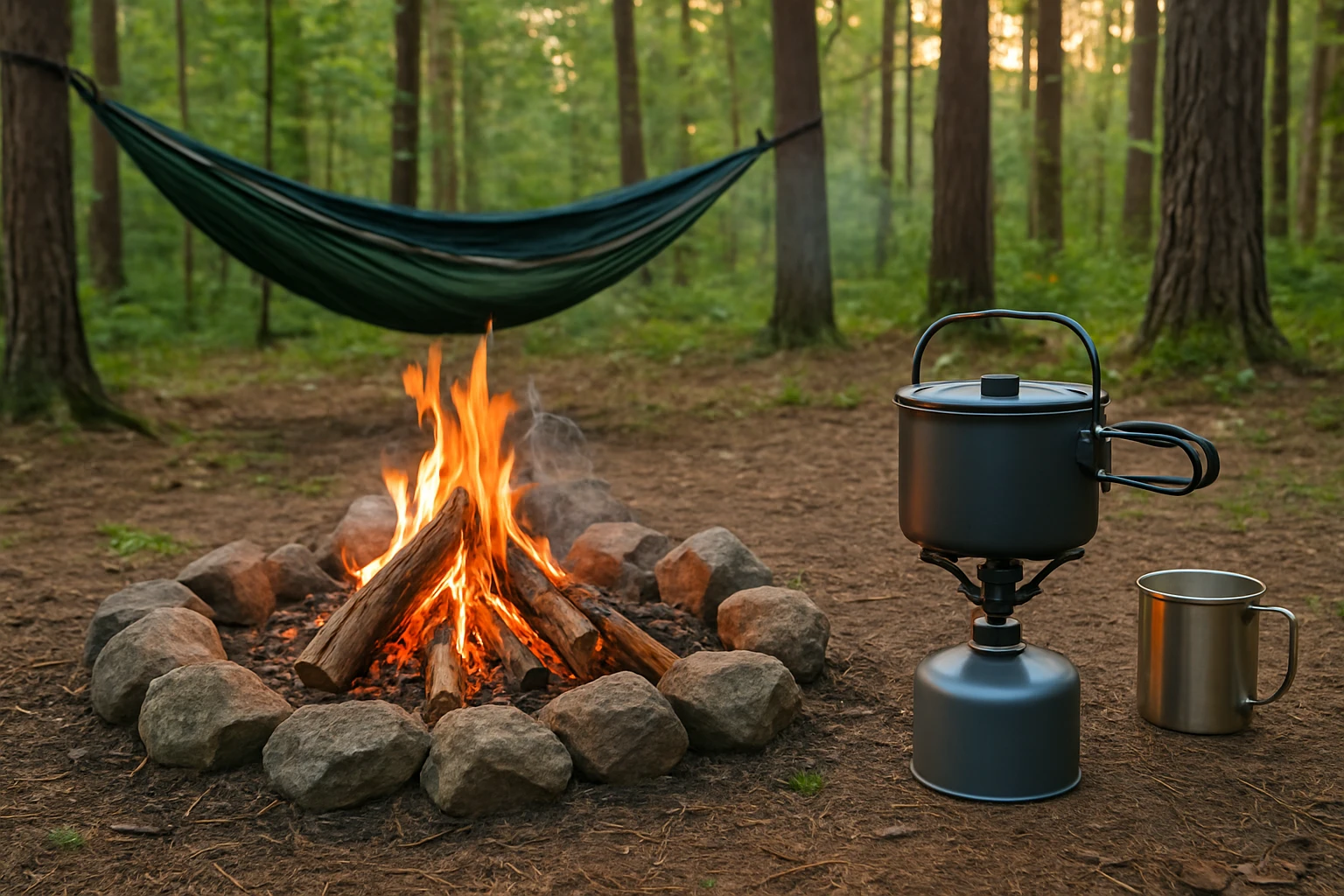
Hammock Campfire & Stove Safety Checklist: The Ultimate Guide to Safe Hammock Camping
Introduction
Hammock camping offers a unique blend of comfort and immersion in nature, yet it introduces distinct safety considerations that differ from traditional tent camping. This guide explains how to evaluate site selection, secure hammocks, and operate portable stoves without compromising personal safety or the environment. Readers will learn foundational concepts, compare top-rated products, and acquire actionable tips that enable confident, risk‑aware adventures.
By the end of this article, one will be able to assemble a reliable hammock‑and‑stove setup, recognize potential hazards, and apply a systematic checklist before every outing. The information is based on reputable product data, field‑tested practices, and expert consensus.
Background & Context
Modern hammock camping draws on centuries‑old weaving traditions from Brazil, the Caribbean, and Southeast Asia. Contemporary designs incorporate high‑strength nylon ropes, breathable canvas, and compact carrying solutions that make hammocks portable for backpackers and backyard enthusiasts alike. Simultaneously, portable stoves have evolved from simple alcohol burners to dual‑fuel units capable of delivering up to 8,000 BTU while remaining lightweight.
Understanding the physics of load distribution, fire dynamics, and fuel properties is essential for safe operation. For example, a hammock’s rope system must share weight evenly to prevent rope failure, while a stove’s flame must be protected from wind to avoid incomplete combustion and carbon monoxide buildup.
These principles underpin the safety checklist presented herein and guide the selection of equipment that meets both performance and reliability criteria.
Choosing a Safe Hammock
When selecting a hammock, prioritize load capacity, material durability, and ease of installation. The INNO STAGE Double Hammock provides a 350 lb capacity, reinforced nylon ropes woven according to physics‑based weight distribution rules, and a breathable heavy‑duty canvas that forms a cocoon‑style enclosure.
Key specifications include a total length of 133.8 inches and a bed size of 94.5 × 63 inches, offering ample space for two occupants. Its compact carrying bag simplifies transport and storage, while included hanging straps enable quick setup on trees, posts, or dedicated stands.
Safety considerations for hammocks involve:
- Inspecting rope integrity before each use.
- Ensuring anchor points can support at least twice the combined weight.
- Maintaining a minimum clearance of 6 feet from the ground to avoid injury during a fall.
- Using a tarp or rainfly when camping in wet conditions to prevent moisture‑related slippage.
By adhering to these guidelines, users reduce the risk of rope failure, excessive sway, or sudden collapse.
Stove Selection and Safety
Portable stoves must balance heat output, fuel versatility, and safety mechanisms. The Coleman Classic 1‑Burner Butane Stove delivers 7,650 BTU, features an InstaStart push‑button ignition, and includes a removable porcelain‑coated grate for easy cleaning. Its lightweight design and included carry case make it ideal for car camping and short‑duration hikes.
For users who desire dual‑fuel flexibility, the Gas One GS‑3400P Dual Fuel Stove operates on both butane cartridges and propane cylinders, incorporates an automatic piezo‑electric ignition, and includes a pressure‑sensor cartridge ejection system that shuts off gas if irregular pressure is detected.
Another high‑efficiency option is the Fire‑Maple Fixed Star 1 Stove System. Its integrated pot‑stove design utilizes advanced heat‑exchange technology to reduce boiling time by up to 30 % and weighs only 18 oz, making it exceptionally portable for backpacking.
Critical safety features to verify before purchase include:
- Secure ignition mechanisms (piezo or push‑button) that prevent accidental sparks.
- Wind protection systems such as baffles or heat exchangers.
- Built‑in pressure sensors or cartridge ejection devices for dual‑fuel models.
- Sturdy, non‑slipping bases that keep the stove stable on uneven terrain.
These attributes mitigate fire hazards, fuel leaks, and accidental burns.
Integrating Hammock and Stove for Campfire‑Free Cooking
Combining a hammock with a portable stove requires careful spatial planning to avoid heat exposure to the hammock fabric, which can degrade the canvas or create fire risk. Position the stove at least 3 feet away from the hammock’s suspension points and use a windscreen to direct heat upward rather than outward.
When cooking in a hammock camp, consider the following workflow:
- Set up the hammock on stable anchors, confirming a level, horizontal orientation.
- Lay a fire‑resistant mat or metal tray beneath the stove to protect ground vegetation.
- Deploy the stove’s windscreen and ensure adequate ventilation to prevent carbon monoxide buildup.
- Use a lightweight, insulated pot that matches the stove’s output (e.g., the 1‑liter pot included with the Fixed Star 1 system).
- After cooking, allow the stove to cool completely before packing, and store the hose or fuel canister away from the hammock.
This systematic approach maintains a safe distance between flame and fabric while preserving the hammock’s comfort.
Comparison / Selection Guide
| Feature | INNO STAGE Double Hammock | Coleman 1‑Burner Butane Stove | Gas One GS‑3400P Dual Fuel | Fire‑Maple Fixed Star 1 |
|---|---|---|---|---|
| Weight (approx.) | 4.5 lb | 1.8 lb (stove only) | 2.2 lb | 1.1 lb (pot‑stove combo) |
| Load Capacity / Power | 350 lb | 7,650 BTU | 8,000 BTU (dual fuel) | Up to 30 % faster boil (heat‑exchange) |
| Fuel Type | None (manual setup) | Butane canisters | Butane or Propane | Propane canister (not included) |
| Key Safety Feature | Even‑weight rope weave | InstaStart ignition | Pressure‑sensor cartridge ejection | Integrated windscreen & piezo ignitor |
| Price (USD) | $35.68 | $34.22 | $29.99 | $49.95 |
| Amazon Rating | 4.6/5 (3,980 reviews) | 4.6/5 (1,933 reviews) | 4.6/5 (14,869 reviews) | 4.5/5 (3,436 reviews) |
Choose the hammock if the primary need is comfortable sleeping space with high load capacity. Opt for the Coleman stove when simplicity, low weight, and quick ignition are paramount. The Gas One model is best for users who travel between regions where one fuel type may be unavailable. The Fire‑Maple system excels for ultra‑light backpackers seeking integrated cooking and minimal pack volume.
Best Practices & Tips
Beyond equipment selection, the following practices enhance overall safety:
- Pre‑Trip Inspection: Test hammock ropes, check for frayed strands, and verify stove ignition before departure.
- Site Selection: Avoid setting up under overhanging branches, near dry grass, or on steep slopes that could cause the hammock to slide.
- Ventilation: When using a stove inside a shelter, ensure at least two openings for fresh air to prevent carbon monoxide accumulation.
- Fuel Storage: Keep fuel canisters upright, away from direct sunlight, and in a fire‑resistant container.
- Fire Extinguishment: Carry a compact fire‑extinguishing blanket or a small bottle of water to douse accidental sparks.
- Leave No Trace: Pack out all trash, residual fuel, and used rope ties to preserve the environment.
Applying these habits creates a safety culture that protects both the camper and the surrounding ecosystem.
Frequently Asked Questions
- 1. Can I use a propane stove inside a hammock tent?
- Only if the tent provides adequate ventilation and you employ a windscreen. Prefer butane or dual‑fuel stoves with built‑in safety shut‑offs, such as the Gas One GS‑3400P.
- 2. How far should the stove be from the hammock?
- A minimum distance of three feet is recommended to prevent heat damage to the canvas and reduce fire risk.
- 3. Are nylon ropes safe for heavy users?
- Yes, when the rope is woven to distribute weight evenly, as demonstrated by the INNO STAGE Double Hammock’s design, supporting up to 350 lb.
- 4. What is the best fuel for high‑altitude camping?
- Butane performs well at moderate altitudes, but propane maintains pressure better at high elevations. A dual‑fuel stove offers flexibility.
- 5. How do I clean the stove after use?
- Allow the stove to cool, then remove the porcelain‑coated grate (Coleman model) or wipe the base with a damp cloth. Avoid submerging electronic ignitors.
- 6. Can I leave the hammock hanging overnight?
- Yes, provided the anchors are secure, the ropes are inspected, and the hammock is protected from wildlife and weather.
- 7. Do I need a separate windscreen for the Fire‑Maple stove?
- The Fixed Star 1 includes an integrated windscreen, but using an additional portable windscreen can further improve efficiency in strong breezes.
Conclusion
The intersection of hammock comfort and portable stove convenience demands a disciplined safety approach. By understanding load dynamics, fuel properties, and fire‑prevention techniques, campers can enjoy restful sleep and hot meals without compromising safety. Selecting equipment that aligns with personal needs—whether the robust INNO STAGE Double Hammock, the user‑friendly Coleman stove, the versatile Gas One dual‑fuel unit, or the ultra‑light Fire‑Maple system—completes the checklist. Remember to inspect gear, choose appropriate sites, maintain proper distances, and follow ventilation guidelines. With these practices, hammock camping becomes a rewarding, low‑risk adventure.
Products Featured in This Guide
INNO STAGE Double Hammock
Price: $35.68 | Rating: 4.6/5 (3,980 reviews)
Featured for its 350 lb capacity, physics‑based rope weave, and portable carrying bag that exemplify safe hammock design.
Coleman Classic 1-Burner Butane Stove
Price: $34.22 | Rating: 4.6/5 (1,933 reviews)
Featured for its 7,650 BTU output, InstaStart ignition, and compact carry case, making it ideal for quick, safe camp cooking.
Gas One GS-3400P Dual Fuel Stove
Price: $29.99 | Rating: 4.6/5 (14,869 reviews)
Featured for its dual‑fuel capability, pressure‑sensor safety system, and piezo ignition, offering flexibility for diverse camping scenarios.
Fire-Maple Fixed Star 1 Stove System
Price: $49.95 | Rating: 4.5/5 (3,436 reviews)
Featured for its integrated pot‑stove design, heat‑exchange efficiency, and ultra‑light weight, perfect for backpackers seeking compact cooking solutions.