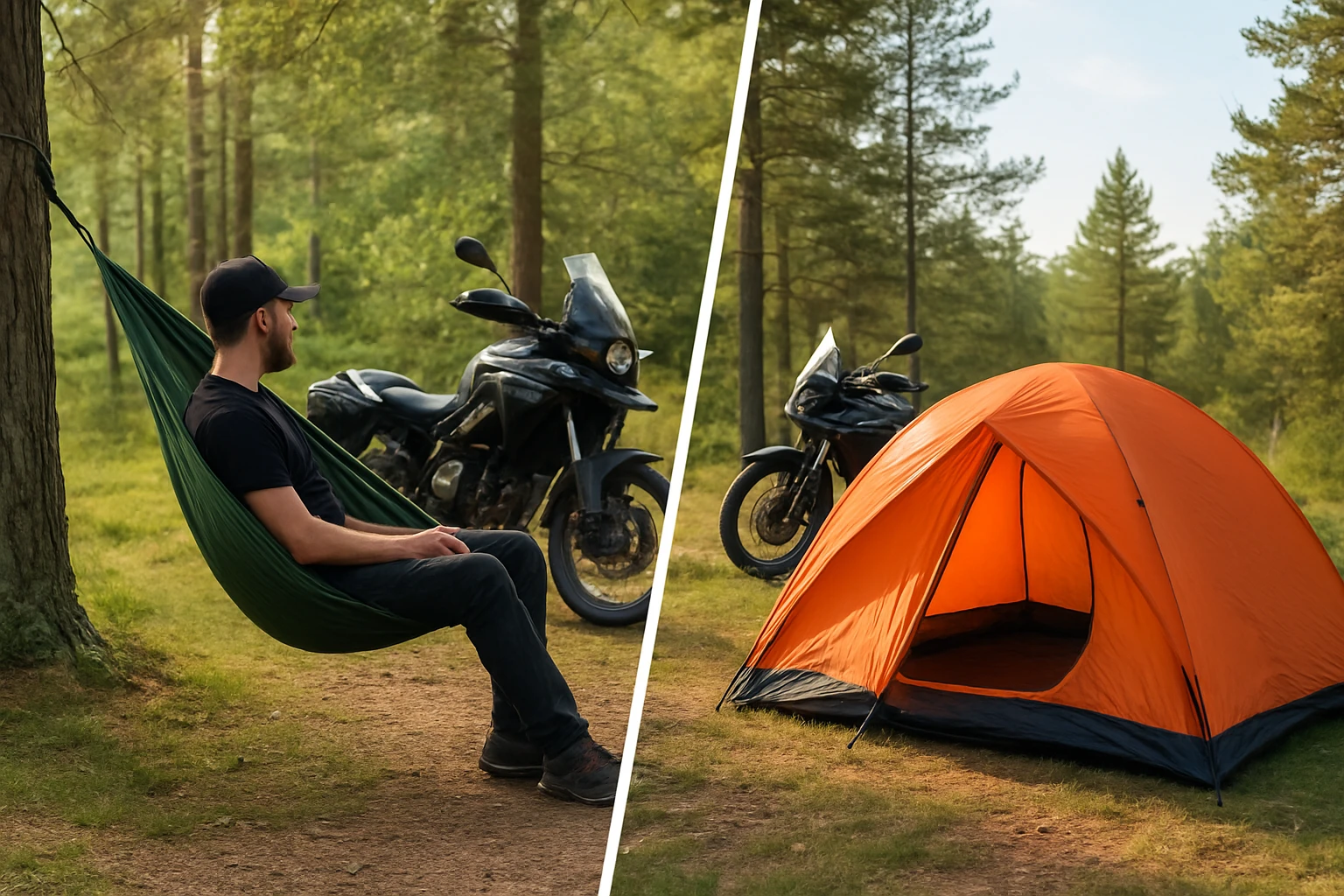
Hammock vs Tent Motorcycle Camping: The Ultimate Guide to Choosing the Best Shelter for Two-Wheel Adventures
Introduction
Motorcycle travelers often face the challenge of selecting a lightweight, durable shelter that can withstand diverse weather while fitting on a limited bike rack. This guide explains the fundamental differences between hammocks and tents, outlines the scenarios where each excels, and provides expert recommendations for four top‑rated products. Readers will learn how to evaluate weight, setup speed, weather protection, and comfort, enabling them to make an informed decision for any two‑wheel adventure.
Throughout the article, real‑world examples illustrate how each shelter type performs on the road, in the mountains, and during long‑distance rides. By the end, you will have a clear action plan for choosing, packing, and using the ideal shelter for your motorcycle trips.
Background / Context
Motorcycle camping differs from traditional car or backpack camping because storage space is at a premium and the rider must balance load distribution on the bike. Shelters must therefore be compact, lightweight, and easy to deploy after a long ride. Historically, tents have dominated the market, but hammocks have gained popularity due to their minimal ground contact, quick setup, and superior ventilation.
Understanding the technical terms is essential. "Water resistance" measured in millimeters (mm) indicates how much pressure a fabric can endure before leaking; a 3500 mm rating stops moderate rain, while 4000 mm or higher handles heavy downpours. "Rip‑stop" refers to a reinforced weave that prevents tears from spreading. "Load capacity" denotes the maximum weight a shelter can safely support, a critical factor for motorcycle riders carrying gear.
Understanding Shelter Types for Motorcycle Camping
Both tents and hammocks serve the same primary purpose—providing a dry, protected sleeping environment—but they achieve it through distinct design philosophies. Tents create a floor‑based enclosure, shielding occupants from ground moisture, insects, and wind. Hammocks suspend the sleeping platform between two anchor points, eliminating contact with the ground and often offering superior airflow.
When evaluating a shelter, consider four core criteria: weight, pack size, weather protection, and comfort. Weight influences fuel efficiency and handling; pack size determines whether the shelter fits on a rear rack or top case; weather protection encompasses waterproof ratings, wind resistance, and bug netting; comfort includes sleeping surface, interior space, and ease of entry.
When to Choose a Tent
Tents excel in environments where ground conditions are wet, uneven, or covered with sharp objects. A floor provides a barrier against moisture and insects, and many modern tents incorporate integrated rainflies that deliver 4000 mm or higher waterproof protection. For motorcycle riders who camp in forested valleys, alpine meadows, or desert scrub, a reliable tent can be the safest option.
Among the tent options, the Camppal 1-Person Tent stands out for its ultralight 3.75 lb construction, single‑ridge pole design, and 3500‑4000 mm water resistance. Its extended 8.2 ft length accommodates taller riders and provides extra storage space for backpacks and clothing. The aluminum pole frame offers wind resistance comparable to larger four‑season tents, making it suitable for high‑altitude passes.
The second Camppal model, Camppal Solo Tent, adds a quick‑setup carry bag and a 30‑day money‑back guarantee, addressing concerns about packaging durability. Both tents share a fire‑retardant CPAI‑84 rating, seam‑taped zippers, and reinforced corner stakes, ensuring stability in wind gusts up to 30 mph.
For riders who prioritize a full shelter system with integrated bug netting, rainfly, and an insulated sleeping pad, the Haven Lay Flat Hammock Tent blurs the line between tent and hammock. Its flat sleeping platform eliminates the traditional “banana” curve, allowing riders to sleep on their backs without spinal strain—an advantage for long‑haul journeys where rest quality directly impacts safety.
When to Choose a Hammock
Hammocks shine in warm climates, dense forests, and locations where trees are abundant. By suspending the sleeping surface above the ground, hammocks keep occupants dry even when the forest floor is soaked, and they promote airflow that reduces condensation. The lack of a floor also means fewer components to pack, resulting in lighter overall weight.
The WintMing Hammock Tent offers a versatile 3‑in‑1 design that includes a mosquito net, rain fly, and a sturdy 70D nylon construction rated for 440 lb. At only 3.5 lb, it is one of the lightest full‑feature hammock systems on the market, making it ideal for riders who need to keep their bike’s payload low while still having a reliable shelter.
Key features such as a pop‑up waterproof rainfly, integrated loop straps, and a compact accessory bag simplify setup after a long ride. The hammock’s 8.9 ft × 4.6 ft sleeping area provides ample room for a full‑size sleeping bag, and the built‑in bug net ensures protection from insects without sacrificing ventilation.
For riders who desire a hammock that mimics a traditional tent’s protection, the Haven Lay Flat Hammock Tent incorporates a 4000 mm waterproof rainfly and a high‑density mesh net. Its insulated air pad creates a flat sleeping surface, eliminating the common “hammock sway” that can cause discomfort on cold nights. The system’s quick‑tree setup (under 5 minutes) aligns with the fast‑pitch expectations of motorcycle adventurers.
Hybrid Options and Accessories
Some riders prefer a hybrid approach—using a lightweight tent for rainy nights and a hammock for warm evenings. Both the Camppal tents and the WintMing hammock include detachable rain flies, allowing users to adapt the shelter to changing conditions. Additionally, a compact tarp or bivy can be added to any setup for extra wind protection.
Essential accessories include sturdy tree straps (minimum 1‑inch width) to prevent damage to bark, lightweight stakes for ground‑based tents, and a portable pump for the Haven air pad. When packing, distribute weight evenly across the motorcycle’s rear rack to maintain handling stability. A balanced load reduces the risk of sway during high‑speed riding.
For riders who travel in colder climates, consider a sleeping pad with an R‑value of 4 or higher. The Haven insulated pad offers an R‑value sufficient for temperatures down to 30 °F, while the Camppal tents can accommodate an additional foam pad without exceeding weight limits.
Comparison / Selection Guide
| Feature | Camppal 1‑Person Tent | Camppal Solo Tent | WintMing Hammock Tent | Haven Lay Flat Hammock Tent |
|---|---|---|---|---|
| Weight (lb) | 3.75 | 3.75 | 3.5 | ~6 (including pad) |
| Pack Size (inches) | 15×6×6 | 15×6×6 (with bag) | Compact roll, ~12×4×4 | 15×6×6 (including air pad) |
| Waterproof Rating (mm) | 3500‑4000 | 3500‑4000 | 70D nylon with rainfly (≈4000) | 4000 |
| Capacity (lb) | 150 | 150 | 440 | 300 |
| Price (USD) | $86.99 | $89.99 | $89.99 | $360.99 |
| Rating | 4.3/5 (1,075 reviews) | 4.3/5 (1,075 reviews) | 4.1/5 (973 reviews) | 4.4/5 (228 reviews) |
Use this table to match your priorities with the shelter that best fits your riding style. If weight and pack size are paramount, the WintMing hammock offers the lightest solution. If you require a floor and maximum wind resistance, the Camppal tents provide a proven four‑season design. For ultimate comfort on long trips, the Haven Lay Flat Hammock Tent delivers a flat sleeping surface and integrated insulation.
Best Practices & Tips for Motorcycle Camping Shelters
- Inspect anchor points before setup; choose healthy trees with a diameter of at least 4 inches to support the load.
- Always use a rainfly, even in light drizzle; a 3500 mm rating stops most showers, but wind‑driven rain can exceed that pressure.
- Secure the shelter’s interior with a gear loop or small stuff sack to prevent items from shifting during windy nights.
- When using a hammock, attach a tarp or rainfly with a slight overhang to direct water away from the sleeping area.
- Pack a lightweight repair kit (tape, nylon cord, and a small patch) to address tears or broken poles on the road.
- Distribute weight evenly on the motorcycle’s rack; place the shelter at the center of the load to maintain handling balance.
- Practice setup at home before a long ride; a three‑minute pitch for the Camppal tents or a five‑minute tree setup for the Haven system becomes second nature with repetition.
Frequently Asked Questions
- Can I use a hammock in snowy conditions? Yes, provided you have a waterproof rainfly, an insulated pad, and a high‑R‑value sleeping bag. The Haven Lay Flat Hammock Tent’s insulated pad is specifically designed for cold weather.
- What is the minimum tree spacing for a hammock? Most hammocks require 6‑10 ft between anchor points. The WintMing system includes adjustable straps that accommodate a wide range of distances.
- Do I need a separate ground tarp for a tent? While the Camppal tents have a waterproof floor, a lightweight footprint adds extra protection on rocky or abrasive ground.
- How do I protect my motorcycle’s load from rain? Use waterproof dry bags for clothing and gear, and place the shelter’s rainfly over the rear rack when parked for extended periods.
- Which shelter offers the best bug protection? Both the WintMing Hammock Tent and the Haven Lay Flat Hammock Tent feature high‑density mesh nets that keep insects out while allowing airflow.
- Is it legal to camp in a hammock on public lands? Regulations vary by jurisdiction; always check local rules before setting up a hammock in national parks or state forests.
- Can I combine a tent and a hammock on the same trip? Absolutely. Many riders carry a lightweight tent for rainy nights and a hammock for warm evenings, swapping as conditions dictate.
Conclusion
Choosing between a hammock and a tent for motorcycle camping hinges on weight, weather, terrain, and personal comfort preferences. The Camppal 1‑Person Tent and Camppal Solo Tent deliver reliable four‑season protection with minimal setup time, making them ideal for riders who prioritize a floor and wind stability. The WintMing Hammock Tent offers a feather‑light, versatile solution for warm climates and rapid deployment. The Haven Lay Flat Hammock Tent merges the best of both worlds, delivering flat‑surface comfort, integrated insulation, and robust waterproofing for demanding adventures.
By applying the best‑practice tips, selecting the appropriate accessories, and understanding the comparative strengths outlined above, motorcycle travelers can enjoy restful nights and safe rides, regardless of the terrain they encounter.
Products Featured in This Guide
Camppal 1-Person Tent
Price: $86.99 | Rating: 4.3/5 (1,075 reviews)
Featured for its ultralight 3.75 lb weight, single‑ridge pole setup, and 3500‑4000 mm waterproof rating, making it ideal for solo motorcycle campers seeking a compact four‑season shelter.
Camppal Solo Tent
Price: $89.99 | Rating: 4.3/5 (1,075 reviews)
Featured for its quick‑setup carry bag, 30‑day money‑back guarantee, and identical performance to the original Camppal model, providing peace of mind for long trips.
WintMing Hammock Tent
Price: $89.99 | Rating: 4.1/5 (973 reviews)
Featured for its 3‑in‑1 design (hammock, mosquito net, rain fly), 440 lb load capacity, and lightweight 3.5 lb package, perfect for riders who need a versatile, low‑weight shelter.
Haven Lay Flat Hammock Tent
Price: $360.99 | Rating: 4.4/5 (228 reviews)
Featured for its flat sleeping platform, integrated insulated pad, and 4000 mm waterproof rainfly, delivering premium comfort and protection for long‑distance motorcycle adventurers.