How to Adjust a Hammock for Proper Spinal Alignment: Step‑by‑Step Setup for Back Pain Relief
Introduction
One will discover how to configure a hammock so that it supports the natural curvature of the spine, reduces pressure on the lumbar region, and promotes deeper, restorative sleep. Proper hammock adjustment transforms a casual lounging device into a therapeutic tool that can alleviate chronic back discomfort. This guide explains the underlying biomechanics, outlines each setup stage, and highlights tools that simplify the process. By following the instructions, one can experience measurable improvement in posture and overall well‑being.
What You’ll Need
- A sturdy double hammock such as the INNO STAGE Double Hammock
- Two reliable anchor points (tree branches, wall brackets, or a portable stand)
- Adjustable hanging straps or strong nylon ropes
- A measuring tape
- A small level or smartphone inclinometer app
- A pillow or lumbar roll for fine‑tuning
Step‑by‑Step Instructions
1. Select Appropriate Anchor Points
One should begin by identifying two anchor points that are at least 12 to 15 feet apart and can bear a combined load of at least 350 lb, matching the hammock’s capacity. Tree branches of 8‑inch diameter or metal wall brackets rated for outdoor use are ideal because they provide stable, non‑flexing support. If natural anchors are unavailable, a portable hammock stand can be employed; the stand’s wide base distributes weight evenly, preventing ground sinking.
The INNO STAGE Double Hammock is designed for both indoor and outdoor environments, making it compatible with a variety of anchor options. Its reinforced nylon rope loops are engineered to handle the specified 350 lb capacity without stretching, ensuring safety during prolonged use.
2. Determine the Ideal Hanging Height
Proper spinal alignment requires the hammock to hang at a height that allows the user’s knees to be slightly higher than the hips when lying supine. Measure the distance from the ground to the desired attachment point and subtract approximately 12 to 18 inches; this range accommodates most adult heights while preserving a gentle, cradle‑like curvature. Use a level or inclinometer to verify that each side of the hammock is at the same angle, typically between 30° and 45° relative to the ground.
Adjustable hanging straps simplify height modifications because they feature multiple eye‑hooks that slide along the rope. The straps also reduce wear on the hammock’s woven loops, extending product lifespan.
3. Set the Correct Sag (Drop Length)
The sag, or drop length, directly influences spinal support. A common guideline is the "one‑third rule": the distance between the two anchor points should be roughly one‑third of the total rope length. For a double hammock with 9.8‑foot ropes, a drop of 5 to 6 feet yields a comfortable curvature that aligns the lumbar spine without excessive flattening.
The INNO STAGE hammock’s ropes are pre‑knotted at 9.8 ft each, allowing precise adjustment by sliding the knots along the rope until the desired sag is achieved. This design eliminates the need for additional knots, reducing setup time.
4. Secure the Hammock to the Anchors
Attach the hammock’s woven loops to the anchor points using the adjustable straps or strong nylon ropes. Ensure that each loop is centered on its respective anchor to prevent lateral tilt. Tighten the straps evenly, then test the tension by applying gentle downward pressure at the hammock’s center; the fabric should flex but not stretch excessively.
Because the INNO STAGE hammock includes specially woven strings that add durability, it tolerates repeated tightening without compromising structural integrity. This feature is especially valuable for users who adjust the setup daily.
5. Position the Body for Optimal Alignment
When lying in the hammock, one should position the head near the higher end of the sag and allow the hips to settle into the lower curve. This orientation encourages the natural S‑shaped curvature of the spine, reducing lumbar compression. Place a small pillow under the neck if additional support is required.
For individuals with pronounced lower‑back pain, a lumbar roll can be positioned at the small of the back to maintain the natural lordotic curve. The hammock’s breathable canvas fabric promotes airflow, preventing heat buildup during extended sessions.
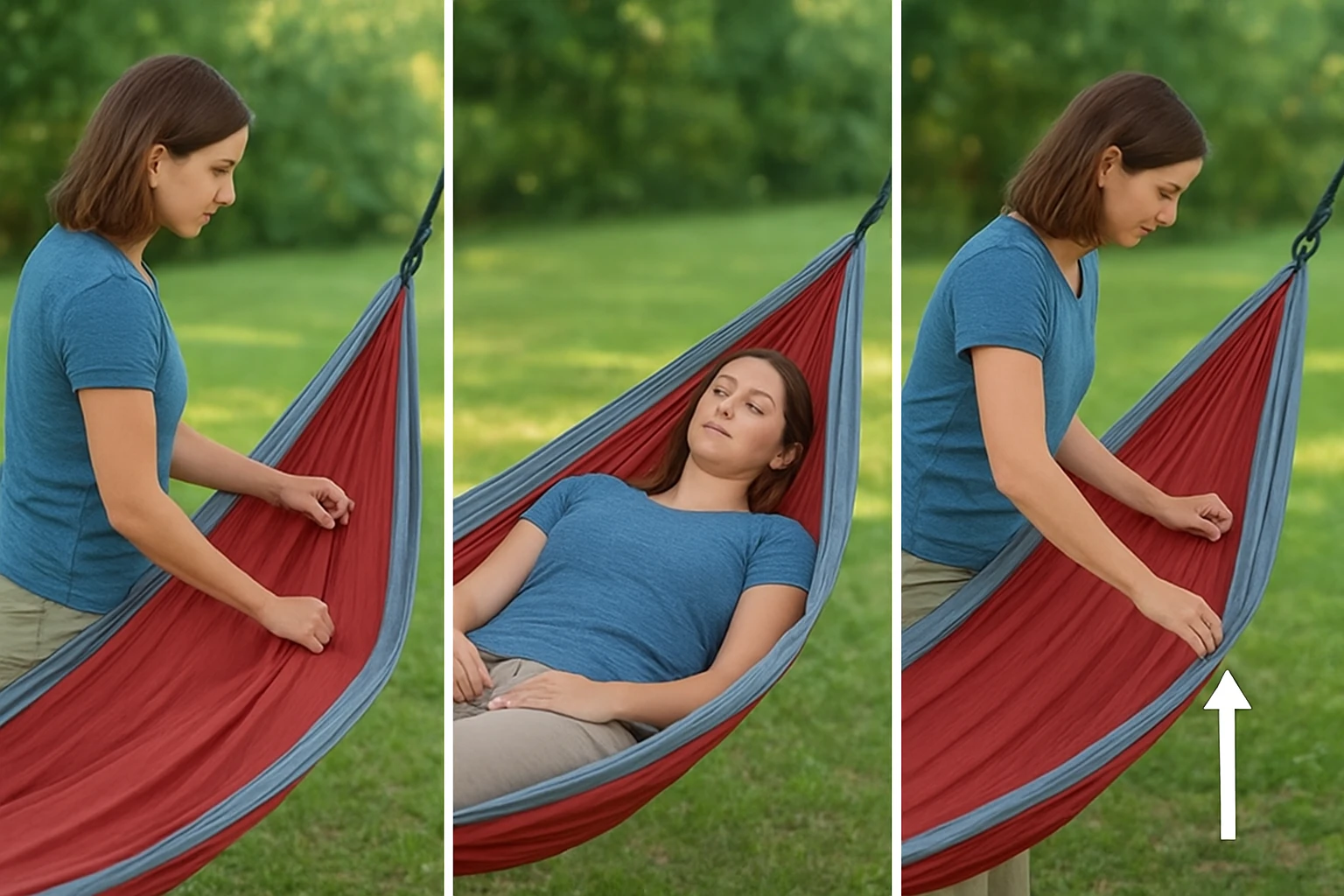
6. Fine‑Tune with Adjustable Straps
After assuming a comfortable position, re‑evaluate the hammock’s angle. If the hips feel too low, raise one side slightly by sliding the strap upward; if the neck feels unsupported, lower the opposite side. Small adjustments of 1‑2 inches often produce significant comfort gains.
The INNO STAGE hammock’s loops are designed to accept both straps and traditional rope knots, giving the user flexibility in choosing the adjustment method that best fits the installation environment.
7. Test for Stability and Safety
Before regular use, perform a safety test by gently rocking side‑to‑side and forward‑backward. Observe whether the anchor points remain steady and whether the hammock returns to its original position without excessive swinging. If any movement is detected in the anchors, reinforce them or select alternative points.
Because the hammock’s canvas is tightly woven, it distributes weight evenly across the surface, minimizing stress concentrations that could lead to tearing. This characteristic contributes to long‑term durability, especially for users who practice daily back‑pain relief routines.
Tips & Pro Tips
- Choose a location with partial shade to avoid direct sunlight, which can cause the canvas to stiffen.
- Rotate the hammock weekly to prevent uneven wear on the fabric.
- Combine the hammock with a light stretching routine; gentle spinal extensions before entry enhance alignment benefits.
- If the hammock is used indoors, attach it to ceiling joists using heavy‑duty eye bolts rated for at least 400 lb.
- Store the hammock in its compact carrying bag when not in use to protect the canvas from dust and moisture.
Troubleshooting
Problem: The hammock feels too flat, causing lower‑back strain.
Solution: Increase the sag by lowering the attachment points or using longer ropes. Ensure the drop follows the one‑third rule.
Problem: Excessive swinging makes it difficult to stay still.
Solution: Add a stabilizing weight (such as a sandbag) to the lower corner of the hammock or tighten the straps to reduce the swing radius.
Problem: The fabric shows signs of fraying at the edges.
Solution: Reinforce the edges with a fabric sealant or replace the hammock if fraying exceeds one inch, as structural integrity may be compromised.
Conclusion
One now possesses a complete methodology for adjusting a hammock to promote proper spinal alignment and alleviate back pain. By selecting sturdy anchor points, calibrating height and sag, and employing adjustable straps, the user creates a supportive cocoon that respects the spine’s natural curvature. Consistent use, combined with the recommended tips, can lead to lasting improvements in posture, sleep quality, and overall health.
Products Mentioned in This Guide
INNO STAGE Double Hammock
Price: $35.89
Rating: 4.6/5.0 (3,977 reviews)
Features: Double Brazilian design, 350 lb capacity, breathable heavy‑duty canvas, portable carrying bag, easy‑hang woven loops.
Frequently Asked Questions
How do I determine the correct hanging height for a hammock to support spinal alignment?
Measure the distance from the anchor points so the hammock sits about 12‑18 inches off the ground and creates a gentle 30‑45° angle when occupied.
What anchor points are safest for a therapeutic hammock setup?
Use sturdy tree branches, wall brackets rated for at least 250 lb, or a purpose‑built portable stand with reinforced steel hooks.
Can I use a pillow or lumbar roll to improve hammock posture?
Yes, placing a small pillow or lumbar roll under the lower back helps fine‑tune curvature and reduces pressure on the lumbar spine.
Why is a level or inclinometer important when adjusting a hammock?
It ensures the hammock’s slope is even on both sides, preventing uneven weight distribution that can cause misalignment.
What are the benefits of adjusting a hammock for proper spinal alignment?
Correct adjustment supports the spine’s natural curve, eases lower‑back pain, and promotes deeper, more restorative sleep.