Introduction
This guide examines the range of insulation strategies that can replace or supplement a traditional hammock underquilt. Readers will learn about DIY fabric solutions, lightweight sleeping pads, and supplemental accessories that maintain comfort in cold weather. The article also highlights two market‑tested products that exemplify effective underquilt performance. By the end of the guide, one will be equipped to select the most suitable option for any hammock camping scenario.
Background/Context
Hammock camping provides a unique sleeping experience, yet exposure to wind and radiative heat loss can cause rapid cooling. Insulation in a hammock must address three primary challenges: preventing convective airflow beneath the body, reducing conductive heat loss through the hammock fabric, and limiting radiative heat loss to the night sky. Traditional sleeping bags are ill‑suited because they do not conform to the hammock’s curvature, leading to cold spots known as Cold Butt Syndrome (CBS). An underquilt hangs beneath the hammock and traps warm air, while alternative methods aim to achieve the same thermal envelope through different means.
Key terms include R-value, a measure of thermal resistance; DWR coating, a durable water‑repellent finish that sheds moisture; and fill power, which indicates the loft of down insulation. Understanding these concepts helps the reader evaluate both commercial and homemade solutions.
DIY Insulation Options
Do‑it‑yourself solutions allow campers to customise insulation to weight, size, and budget constraints. The most common DIY approach involves constructing a quilt or blanket that hangs beneath the hammock.
- Fabric Selection: Choose a ripstop nylon or polyester shell with a DWR coating to resist moisture. A 20‑denier (20D) shell offers a balance between durability and weight.
- Insulation Layer: Insert a polyester pongee or lightweight down fill. A 300‑gram polyester filling provides warmth comparable to a 4‑season underquilt.
- Attachment System: Sew elastic loops or bungee cords onto the edges. This mirrors the elastic strap system found on many commercial underquilts, enabling quick setup.
Example: A DIY quilt constructed with a 20D shell, 300T lining, and 300g polyester fill can achieve a comfort temperature range of 20 °F to 68 °F, similar to the performance of the AYAMAYA Hammock Underquilt. The homemade version may weigh slightly less, but the commercial product includes reinforced stitching and pre‑installed carabiners for durability.
Sleeping Pads for Hammock Camping
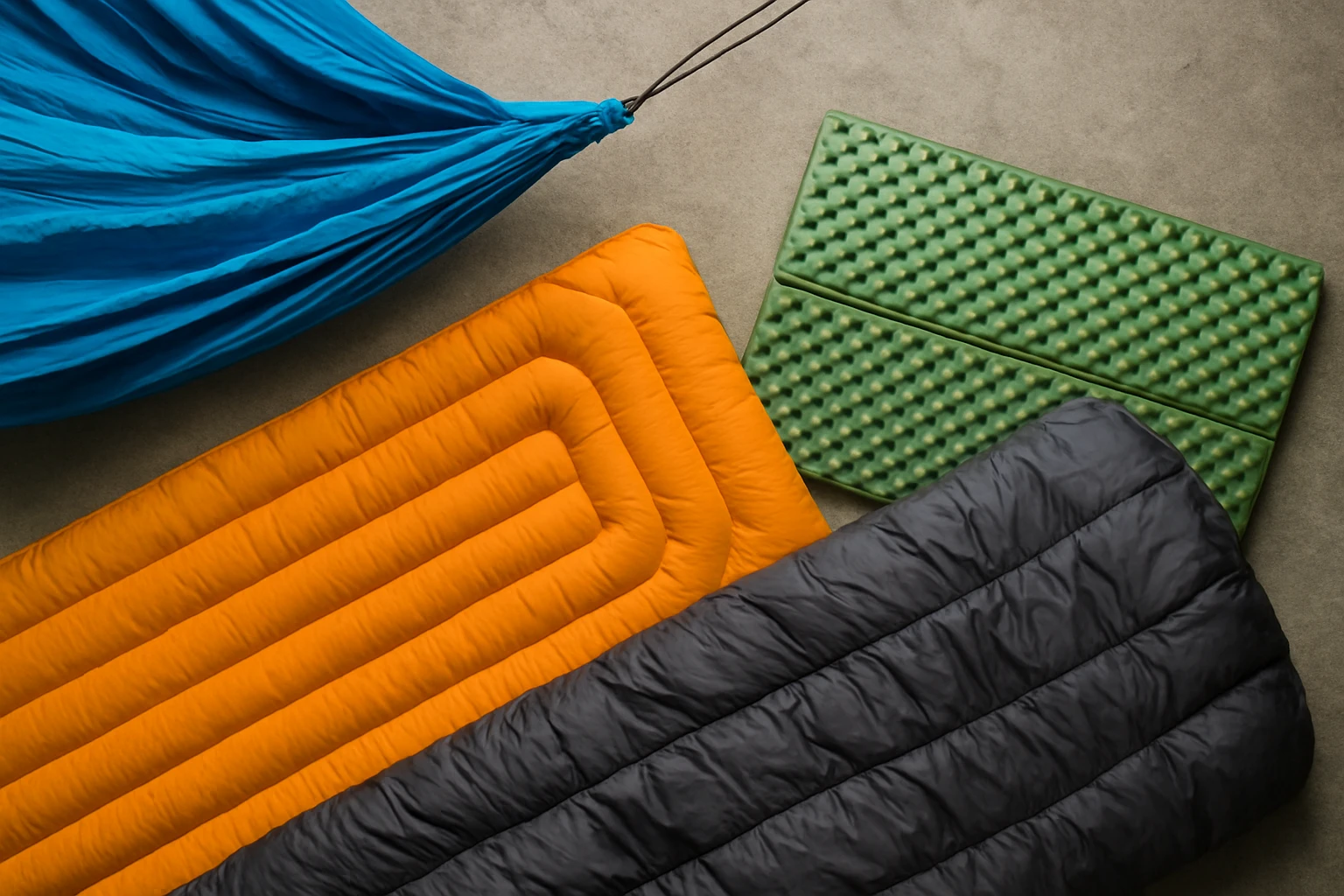
While sleeping pads are traditionally used on the ground, a thin, insulated pad can be suspended between the hammock strings to create a barrier against convective airflow. This method is particularly effective in mild to moderate cold.
- Closed‑cell foam pads are lightweight, water‑resistant, and provide a solid surface that reduces sag.
- Inflatable pads with a low R‑value can be inflated to a modest pressure, creating a thin air pocket that traps heat.
- Hybrid pads combine a foam core with an inflatable top layer, offering both comfort and insulation.
When using a pad, it is essential to secure it with webbing straps that run parallel to the hammock cords. This prevents the pad from sliding and maintains an even air barrier.
Other Insulation Accessories
Supplementary accessories can enhance the thermal envelope without adding a full underquilt.
- Thermal hammocks feature a double‑layer design that traps air between the inner and outer fabrics.
- Wind‑shields or tarp extensions placed over the hammock reduce wind chill.
- Footboxes constructed from lightweight snaps create a sealed chamber for the feet, preventing heat loss.
The Get Out Gear Down Camping Blanket exemplifies a versatile accessory. Its 650 fill‑power down and water‑resistant shell allow it to function as a quilt, footbox, or stand‑alone blanket, providing flexibility for a range of temperatures.
Comparison and Selection Guide
| Feature | AYAMAYA Hammock Underquilt | Get Out Gear Down Camping Blanket | DIY Quilt |
|---|---|---|---|
| Weight | 3.04 lb (includes compression sack) | ~2 lb (compressed) | Varies; typically 2.5–3 lb depending on materials |
| Temperature Range | 20 °F – 68 °F | 45 °F – 65 °F (as blanket); colder when used as quilt | Depends on fill; 300 g polyester ≈ 20 °F – 68 °F |
| Setup Complexity | Elastic straps and carabiners; quick attachment | Snap‑based footbox and optional zipper; moderate | Requires sewing and attachment system |
| Durability | Ripstop nylon with DWR coating; reinforced seams | Polyester shell with water‑resistant finish | Depends on construction quality |
| Price (USD) | $39.99 | $65.99 | Material cost $20–$40 |
| Rating (out of 5) | 4.5 (1,103 reviews) | 4.5 (3,500 reviews) | N/A |
When selecting an insulation method, consider three decision factors: ambient temperature, pack weight constraints, and setup speed. For sub‑20 °F conditions, a high‑fill down blanket used as a quilt offers superior warmth‑to‑weight ratio. For moderate climates where rapid deployment is essential, the AYAMAYA underquilt provides a ready‑made solution with minimal assembly. DIY quilts are ideal for campers who wish to tailor size and insulation to specific gear configurations.
Best Practices & Tips
1. Pre‑condition down products: Allow a compressed down blanket to fully expand for 48 hours before first use. This maximises loft and thermal performance.
2. Secure attachment points: Use carabiners or reinforced loops to prevent slippage. Even distribution of tension reduces cold spots.
3. Layer strategically: Combine a thin sleeping pad with a lightweight underquilt for synergistic warmth. The pad blocks convective airflow while the underquilt traps radiant heat.
4. Protect against moisture: Apply a DWR spray to any fabric component that lacks a factory coating. Moisture can dramatically reduce insulation efficiency.
5. Test in controlled conditions: Set up the system at home on a cold night to verify fit and comfort before relying on it in remote wilderness.
Frequently Asked Questions
Q1: Can a sleeping pad replace an underquilt entirely?
Answer: A pad can reduce convective loss but does not provide the same radiative barrier as an underquilt. For temperatures below 40 °F, an underquilt or quilt is recommended.
Q2: How does fill power affect warmth?
Answer: Higher fill power indicates greater loft per ounce of down, resulting in higher R‑value for the same weight. A 650 fill‑power blanket, such as the Get Out Gear model, offers superior warmth‑to‑weight compared with polyester fill.
Q3: Is it safe to use a blanket as a hammock footbox?
Answer: Yes, when the blanket includes snap‑fasteners, a footbox can be created to seal the lower portion of the hammock, reducing heat loss from the feet.
Q4: What maintenance is required for underquilts?
Answer: Spot‑clean with mild detergent, reapply DWR coating annually, and store in a breathable sack to preserve loft.
Q5: Do DIY quilts void manufacturer warranties?
Answer: DIY projects are independent of commercial warranties. However, using commercially supplied components such as carabiners may still be covered under the original product warranty.
Q6: How much weight can a typical hammock suspension support with added insulation?
Answer: Most hammocks are rated for 400 lb. Adding an underquilt or blanket generally adds less than 5 lb, keeping the total well within safe limits.
Conclusion
Underquilt alternatives provide campers with flexible options to stay warm while maintaining low pack weight. DIY quilts, lightweight sleeping pads, and multifunctional blankets each address specific thermal challenges. By evaluating temperature range, setup speed, and budget, one can select the optimal solution. The AYAMAYA Hammock Underquilt and Get Out Gear Down Camping Blanket illustrate two high‑performance products that complement these strategies.
Products Featured in This Guide
AYAMAYA Hammock Underquilt
Price: $39.99 | Rating: 4.5/5 (1,103 reviews)
Featured because it offers a full‑length, big‑size design with 20D ripstop shell, 300g polyester fill, and elastic straps for rapid setup, covering a wide temperature range.
Get Out Gear Down Camping Blanket
Price: $65.99 | Rating: 4.5/5 (3,500 reviews)
Featured because its 650 fill‑power down and water‑resistant shell allow it to function as a blanket, quilt, or footbox, providing versatile insulation for a range of conditions.